

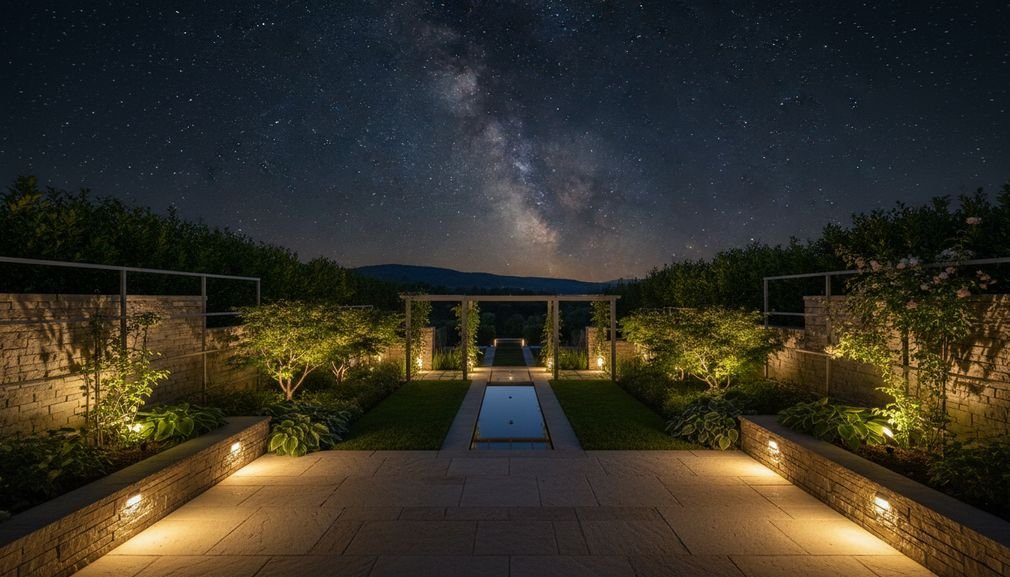
Choosing the right Dark Sky Garden Lighting is about more than just aesthetics; it’s a commitment to protecting nocturnal ecosystems while creating a beautiful, safe outdoor space. For the eco-conscious homeowner, navigating the market can be challenging, with concerns about performance, cost, and true environmental impact. This guide cuts through the noise, offering actionable advice to help you make an informed, responsible choice that benefits both your home and the planet.
Key Takeaways
- True dark sky compliance requires fully shielded fixtures that emit zero light upwards, with a warm color temperature (CCT) of 3000K or less, ideally 2700K.
- Modern technology has overcome common complaints about eco-friendly lighting, with durable materials and better battery tech improving the performance of solar and motion-sensor lights.
- While certified fixtures can cost 20–50% more upfront, they offer long term value through superior build quality, energy efficiency, and profound ecological benefits, like protecting vital nocturnal pollinators.
- The Growing Lure of Dark Sky Garden Lighting: Beyond Just Looks
- Busting Myths: Addressing Common Complaints with Eco-Friendly Lighting
- How to Choose “Dark Sky Compliant” Lights: A 4-Step Guide
- The Investment in Sustainability: Understanding the Cost of Dark Sky Lighting
- Protecting Our Night Shift: The Unseen Benefits for Pollinators
- Common Hesitations: Why Homeowners Resist Ecological Outdoor Lighting
- Innovations in Durable, Beautiful, Dark Sky Friendly Lighting
- Beyond the Basics: What Smart Buyers Should Look For
- Conclusion: Investing in a Greener Future for Your Home
- Frequently Asked Questions
The Growing Lure of Dark Sky Garden Lighting: Beyond Just Looks
The interest in environmentally friendly outdoor lighting is surging. As homeowners invest more in creating beautiful and functional outdoor spaces, the conversation has shifted from mere illumination to responsible lighting design. The global landscape lighting market, estimated at USD 13.2 billion in 2024, is projected to hit USD 22.0 billion by 2030. A key driver of this growth, according to market analysis by Grand View Research, is the increasing demand for energy efficient LEDs and dark sky compliant fixtures. This trend reflects a deeper understanding that our choices in the garden have a ripple effect on the world around us, making Dark Sky Garden Lighting a central piece of modern, sustainable home design.
Busting Myths: Addressing Common Complaints with Eco-Friendly Lighting
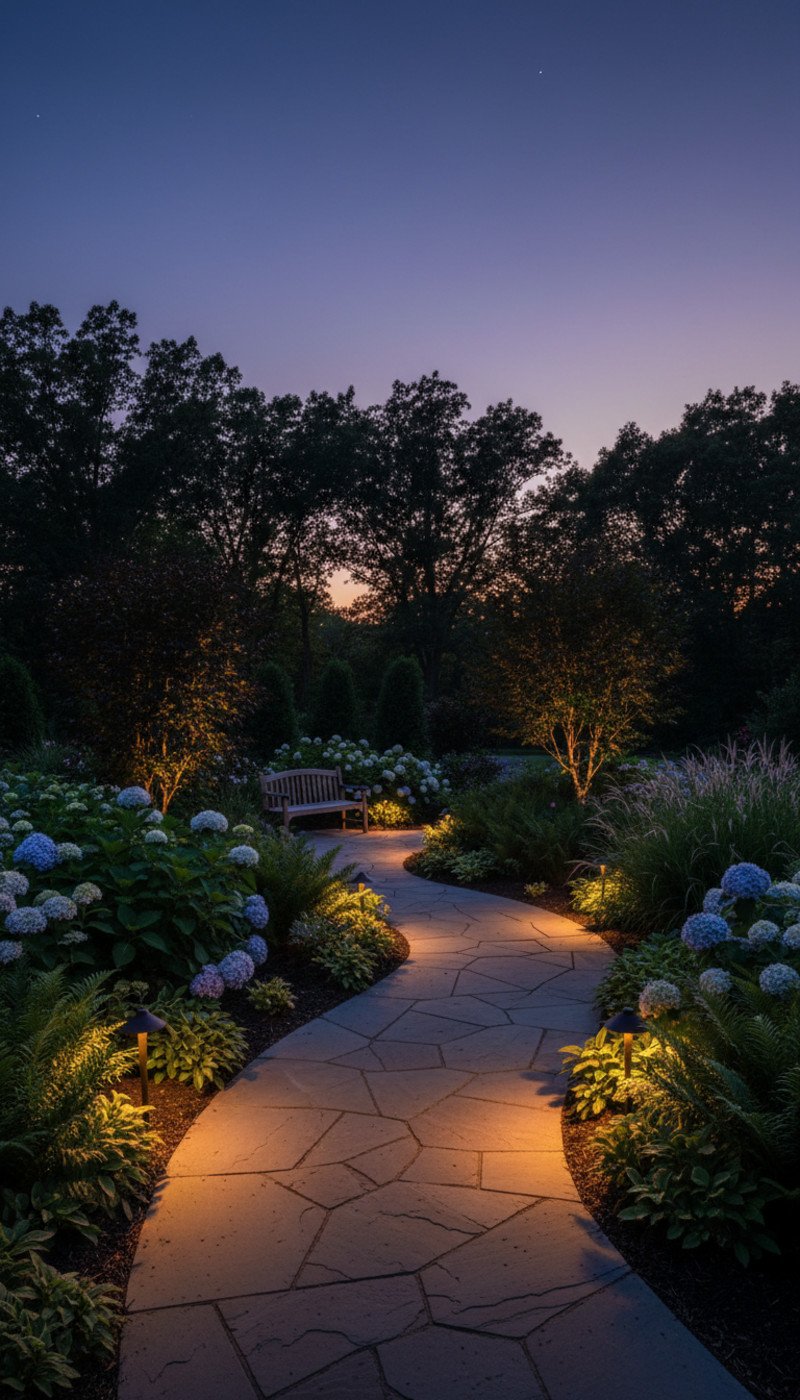
If you’ve hesitated to adopt eco-friendly lights, you’re not alone. Many homeowners have been burned by low quality products. For 2700K warm solar path lights, common complaints include premature failure after just one or two seasons due to water damage, and frustratingly short runtimes of only 2–4 hours. The batteries in these cheaper units often lose significant capacity within 6 to 18 months, rendering them useless.
Similarly, early motion sensor dark sky compliant fixtures often frustrated users with false triggers from wind or small animals, or failing to detect motion at all. A frequent perception was that they produced “too little light,” a direct result of the full cutoff optics designed to prevent skyglow. These valid concerns have shaped a perception that ecological lighting means compromising on performance, but as we’ll see, modern technology has directly addressed these exact pain points.
How to Choose “Dark Sky Compliant” Lights: A 4-Step Guide
Understanding the technical specifications is the single most important step in selecting effective and truly ecological outdoor lighting. Misleading marketing is common, so knowing what to look for on a spec sheet empowers you to make a genuinely good choice. Here’s what matters.
Step 1: Verify the Shielding and Direction
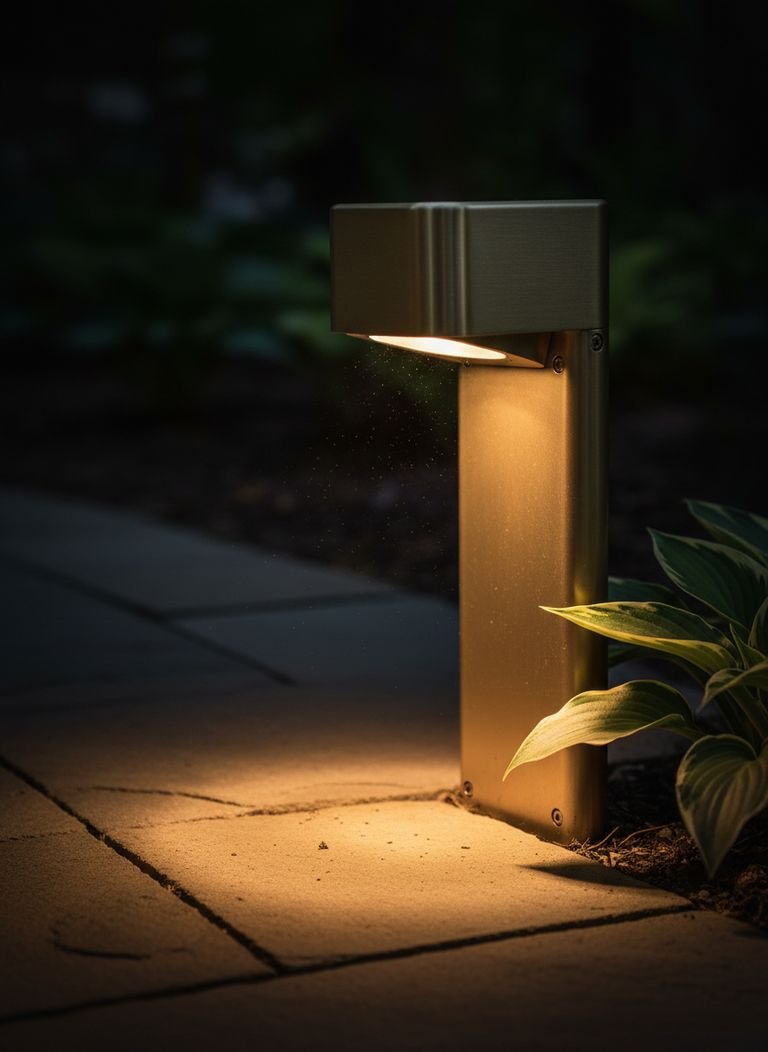
The core principle of dark sky lighting is to keep light pointed down at the ground where it’s needed. Look for terms like “Full Cutoff” or “Zero Uplight.” This means that 0% of the light is emitted at or above 90 degrees (the horizontal plane). Visually, this means the light source (the bulb or LED) should not be visible from the side. Good downward facing garden lights often have a solid, opaque cap or hood that extends over and around the bulb.
Step 2: Check the Color Temperature (CCT)
The color of the light is critical for protecting wildlife. Blue rich white light is particularly disruptive to the circadian rhythms of insects, birds, and even humans. The International Dark-Sky Association (IDA) recommends a Correlated Color Temperature (CCT) of 3000 Kelvin (K) or less, with a strong preference for 2700K or warmer. This produces a soft, warm, almost amber glow that is far less harmful than the harsh, cool-white light of many conventional LEDs.
Step 3: Assess the Brightness (Lumens)
Brighter is not better. The goal is to use the minimum amount of light necessary for safety and navigation. Over-lighting is a major contributor to light pollution and energy waste. For residential pathways, a modest output of 100–200 lumens per fixture is often sufficient. The IDA doesn’t set a hard cap, but emphasizes using only as much light as needed. Many homeowners are surprised by how little light is actually required for comfortable visibility once their eyes adapt to the darkness. This approach is key to any outdoor living space design focused on ambiance.
Step 4: Use Timers and Motion Sensors Wisely
The most eco-friendly light is one that is turned off. For security and convenience, use motion sensor dark sky compliant fixtures that only turn on when needed. For ambient path lighting, use a timer to turn them off after you’ve gone to bed, such as after 11 PM. This simple step dramatically reduces the impact on nocturnal wildlife during their most active hours and is a core part of any smart home installation strategy.
The Investment in Sustainability: Understanding the Cost of Dark Sky Lighting
One of the most significant barriers for homeowners is the upfront cost. It’s true that certified dark sky fixtures often come with a higher price tag. A basic, non-certified downward-facing garden light from a big-box store might cost between $15 and $40. In contrast, an IDA-certified fixture or one built to rigorous dark sky standards can range from $60 to $150 or more. This price increment of around 20–50% is due to tangible factors: superior materials, more complex optical engineering to achieve full cutoff without sacrificing light quality, and the costs associated with certification.
However, this initial investment often translates to a lower total cost of ownership. These higher-quality fixtures are built to last, using materials like marine-grade aluminum or brass that resist corrosion, unlike the cheap plastic that fails after one winter. Better design means they are more energy efficient, and their durability reduces the need for frequent replacements, a key principle of any energy efficient upgrades plan.
Protecting Our Night Shift: The Unseen Benefits for Pollinators
The most compelling reason to adopt ecological outdoor lighting is its profound impact on nocturnal wildlife. Moths, beetles, and even bats are crucial nighttime pollinators, responsible for the health of many plants in our gardens and the broader ecosystem. Conventional bright, blue-rich lighting is disastrous for them. Scientific studies have shown that non-compliant lighting can cause up to a 60% reduction in nocturnal pollinator visits to certain plants. This directly leads to lower plant reproductive success, meaning fewer fruits and seeds.
By switching to warm, shielded, and low-intensity lighting, you are helping to restore a more natural nighttime environment. Warm-spectrum lights with less blue and UV content attract far fewer insects, preventing them from being trapped, exhausted, or eaten at the light fixture. This simple change helps ensure these vital “night shift workers” can continue their work, supporting the biodiversity right in your backyard. This is a core component of creating a truly ecosystem support garden.
Common Hesitations: Why Homeowners Resist Ecological Outdoor Lighting
Beyond cost, several practical and psychological barriers prevent wider adoption. Many homeowners express a genuine concern that dark sky lighting won’t be bright enough for safety, equating brightness with security. This is often based on experience with older, less efficient technology. Another barrier is a perceived lack of aesthetic options, with a belief that compliant fixtures are purely utilitarian. Furthermore, there’s a general lack of awareness about the true scale of light pollution’s ecological damage.
Finally, the complexity of the standards can be confusing. With terms like “full cutoff,” “lumens,” and “Kelvin,” it’s easy for homeowners to feel overwhelmed and unsure of how to make the right choice. These are all valid concerns, but they are being actively addressed by the industry as technology and design options evolve.
Innovations in Durable, Beautiful, Dark Sky Friendly Lighting
The good news is that technology is rapidly catching up to homeowner expectations. Recent advancements in 2700K warm solar path lights directly counter the old complaints. The industry is shifting to more robust lithium-ion or LiFePO₄ battery cells, which offer a much longer cycle life and better performance in cold weather. Combined with more efficient monocrystalline solar panels, modern solar lights can provide reliable, dusk-to-dawn illumination.
For wired downward facing garden lights, innovation is also strong. The use of high-efficacy LEDs (achieving over 120–150 lumens per watt at a warm 2700K) means you get effective light with minimal energy use. Manufacturers are also using far more durable materials like powder-coated aluminum, solid brass, and stainless steel, as detailed in reports from industry analysts like Technavio. These materials ensure that a quality fixture is a long-term investment, not a seasonal throwaway item. These improvements are critical for any long-term backyard renovation project.
Beyond the Basics: What Smart Buyers Should Look For
As the market for Dark Sky Garden Lighting matures, savvy homeowners can look beyond basic compliance to find truly exceptional products. Many leading brands still fall short in a few key areas, creating an opportunity for you to make a smarter choice. One under-addressed area is deep smart home integration. While many lights offer basic app control, few integrate seamlessly with platforms like Matter, HomeKit, or Google Home for advanced automation, such as dimming based on moonlight levels or integrating with security systems.
Another gap is a transparent discussion of long-term ownership costs. Few companies provide clear, comparative data on the lifecycle costs of their solar vs. wired systems, including potential battery replacement schedules. Finally, while many mention the benefit of warm light, they rarely provide detailed information on the human circadian impact, such as the melanopic equivalent daylight illuminance. A brand that addresses these advanced topics demonstrates a deeper commitment to both technology and true wellness, signaling a higher quality product.
Conclusion: Investing in a Greener Future for Your Home
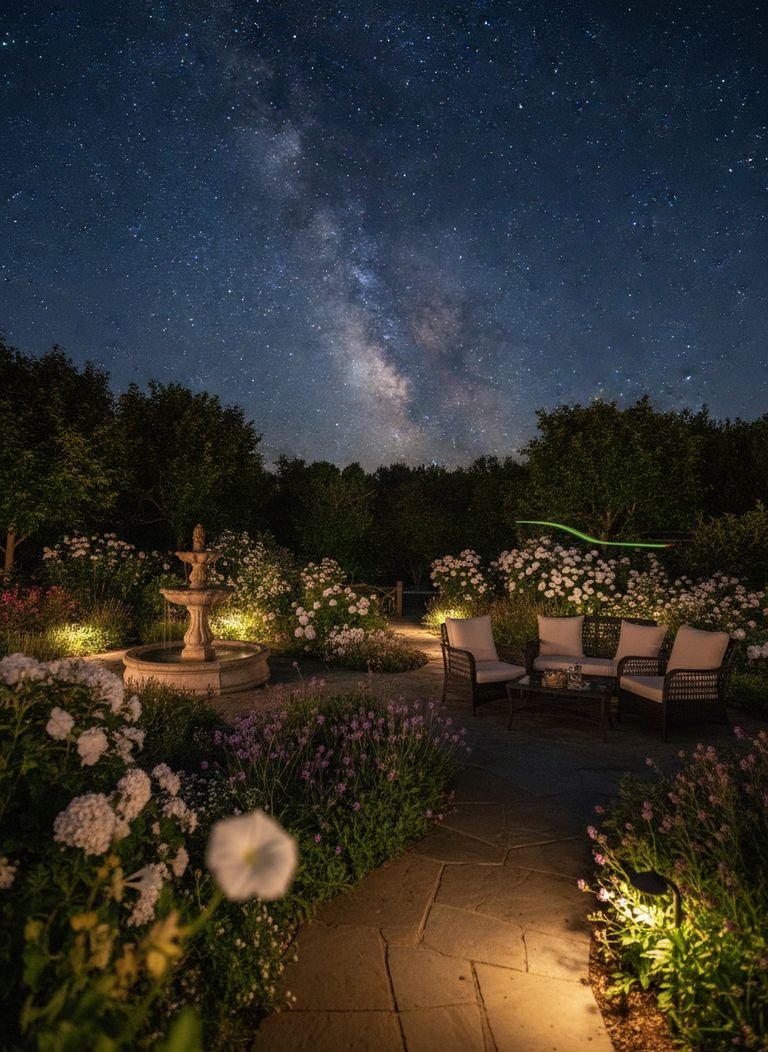
Choosing to implement responsible lighting is a powerful statement. It reflects a desire to blend modern living with ecological stewardship. By understanding the key technical principles of shielding, color, and intensity, you can confidently select products that deliver on their promises of performance, durability, and environmental protection. The initial investment in quality fixtures pays dividends in longevity, energy savings, and the knowledge that your home is a sanctuary for both your family and local wildlife.
By moving beyond the myths of poor performance, you can create an outdoor space that is safe, beautiful, and in harmony with the natural world. Adopting Dark Sky Garden Lighting is not just a home improvement project; it is an investment in a brighter, more sustainable future for everyone.
Ready to light your garden the right way? Explore our curated selection of dark sky compliant fixtures and start your journey today.
Frequently Asked Questions
Is dark sky lighting bright enough for security?
Yes. Security is achieved through the strategic placement of light, not overwhelming brightness. A well-placed, motion-activated, shielded fixture can effectively illuminate a person at an entry point without creating glare or light trespass. The key is to eliminate dark shadows and surprise, which directed lighting does very well, rather than blasting an entire area with light, which can create disabling glare.
Are all warm-colored or amber lights automatically “dark sky compliant”?
No. While a warm color temperature (CCT ≤ 3000K) is a critical component, it is not the only requirement. A fixture must also be fully shielded, meaning it directs all its light downward and produces no uplight. An unshielded “bug light” bulb, for example, is not dark sky compliant because it still sends light up into the sky and out to the sides.
Do I have to replace all my outdoor lights at once?
Not at all. You can take a phased approach. Start with the most problematic fixtures, such as unshielded floodlights or porch lights. Replace them with compliant models first. As other lights, like old path lights, reach the end of their life, replace them with better, dark sky friendly options. Even small changes can make a significant difference.
How can I find fixtures that are certified by the International Dark-Sky Association (IDA)?
The IDA maintains a publicly accessible database of certified products on its website. You can search this database to find fixtures that have been independently tested and verified to meet their strict standards for light pollution reduction. Many manufacturers will also display the “IDA Fixture Seal of Approval” on their product packaging and marketing materials.
Are solar-powered path lights a good dark sky option?
They can be, provided you choose a high-quality model. Look for solar lights that specify a 2700K CCT, have a built-in shield or downward-facing design, and use modern Li-ion or LiFePO₄ batteries for better longevity and performance. Avoid cheap, multi-pack solar lights, as they are a frequent source of consumer complaints and often fail quickly, creating plastic waste.