

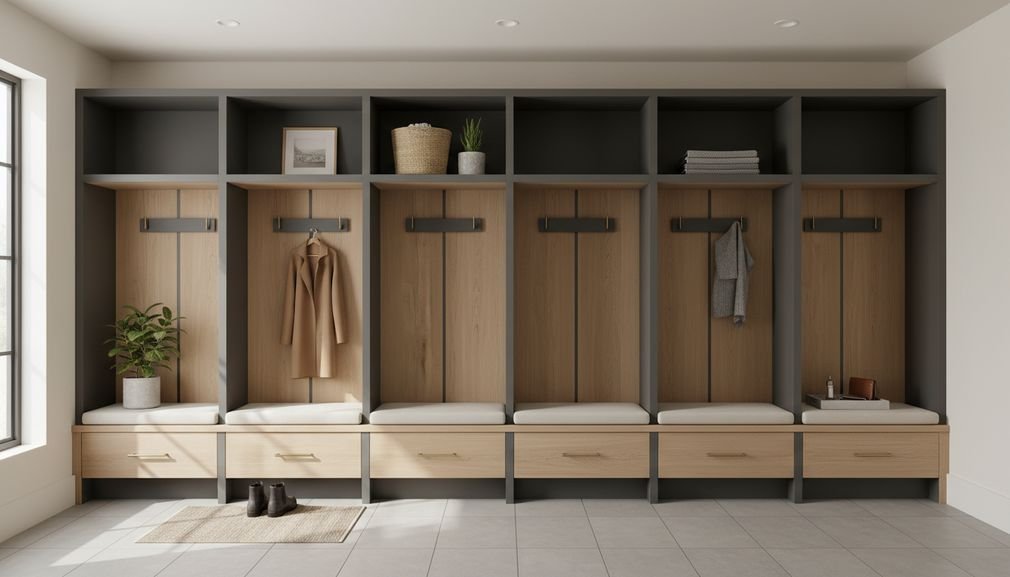
High-quality Modular Mudroom Cubbies are the definitive solution for busy families overwhelmed by entryway clutter, offering a customizable, durable, and adaptable system to conquer daily chaos.
Unlike fixed, one-size-fits-all solutions, a truly modular system grows with your family, adapts to changing seasons, and transforms your home’s busiest traffic zone from a source of stress into a streamlined launchpad for your day. We’ll cut through the marketing noise to show you what truly matters—from material durability to critical dimensions—so you can invest in a system that lasts a lifetime.
Key Takeaways
- Truly modular systems offer unmatched flexibility, allowing you to reconfigure, add, or remove components as your family’s needs for storage change over time.
- Material science is critical; metal-based systems, which dominate the market, provide superior load-bearing capacity and durability compared to common MDF or particleboard alternatives.
- Consumers often overlook crucial technical specifications like cubby depth for adult coats (aim for 15-18 inches) and hook weight capacity, leading to long-term frustration.
Table of Contents
- Taming the Entryway Avalanche: Why Modular Mudroom Cubbies are Your Home’s Next Essential
- Beyond Basic: The True Power of Truly Modular Design for Dynamic Households
- Engineered for Life: Durability and Smart Features Competitors Overlook
- Planning Your Perfect Drop Zone: Critical Specifications Consumers Often Miss
- The Long-Term Investment: Why High-Quality Modular Cubbies Pay Off
- Transform Your Entryway: Finding Your Ideal Modular Mudroom Solution
- Frequently Asked Questions About Modular Mudroom Cubbies
Taming the Entryway Avalanche: Why Modular Mudroom Cubbies are Your Home’s Next Essential
The front door swings open, unleashing a daily avalanche of backpacks, muddy shoes, dog leashes, and sports equipment. For busy households, the entryway isn’t just a passthrough; it’s a high-traffic drop zone that quickly descends into chaos. This constant clutter is more than an eyesore—it’s a daily source of friction and wasted time. While many homeowners look for solutions, traditional closets and simple hooks often fail to contain the mess effectively.
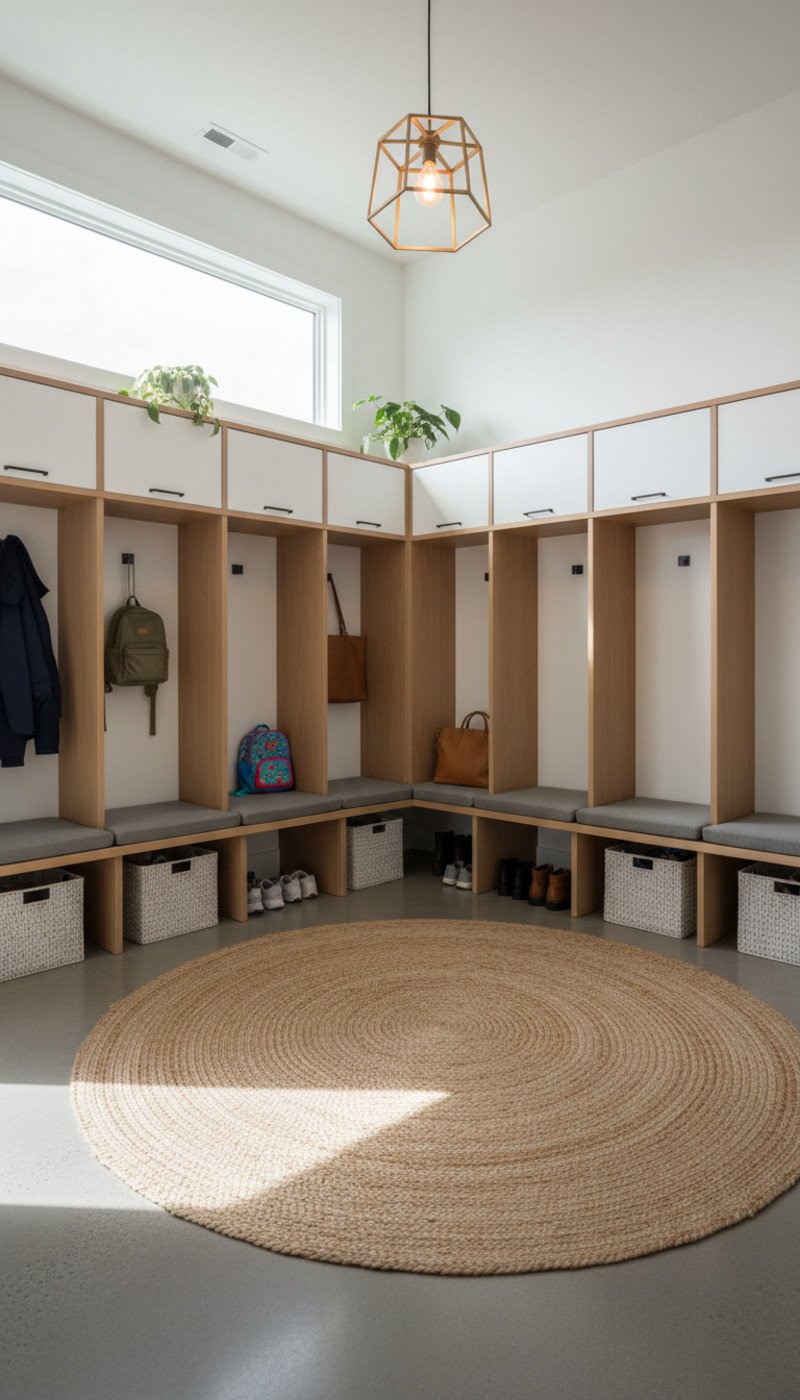
This is where modular mudroom cubbies emerge as a superior, high-efficiency system. Unlike static, built-in units, modular designs are engineered for adaptation. They provide a designated spot for every item, creating intuitive drop zone storage ideas that train family members to stay organized. The demand for such optimized spaces is rapidly growing; residential applications now account for 45% of the modular storage market, a trend driven by the need for better space optimization in modern homes, according to a report by Global Insight Services. By investing in a dedicated system, you’re not just buying storage—you’re reclaiming control over your home’s most critical first impression.
Beyond Basic: The True Power of Truly Modular Design for Dynamic Households
The term “modular” is often used loosely, but its true power lies in genuine adaptability. Many off-the-shelf storage systems are merely configurable at setup, locking you into a fixed design. A genuinely modular system allows you to add, remove, and reconfigure components—lockers, benches, shelves, and hooks—long after the initial installation. This is a critical distinction for a dynamic household where needs constantly evolve.
Today’s toddler with a tiny coat and boots will be a teenager with a massive hockey bag and bulky winter gear in a few years. A truly modular system adapts to these changes without requiring a complete overhaul. Market analysis highlights a growing consumer demand for “better customizability and multifunctional units,” signaling a clear frustration with the inflexible designs that plague the market. When choosing a system, ask vendors specifically about future expansion: Can you buy individual components later? How easily can shelves be repositioned? This focus on long-term flexibility is what separates a temporary fix from a permanent solution for creating organized entry cabinetry.
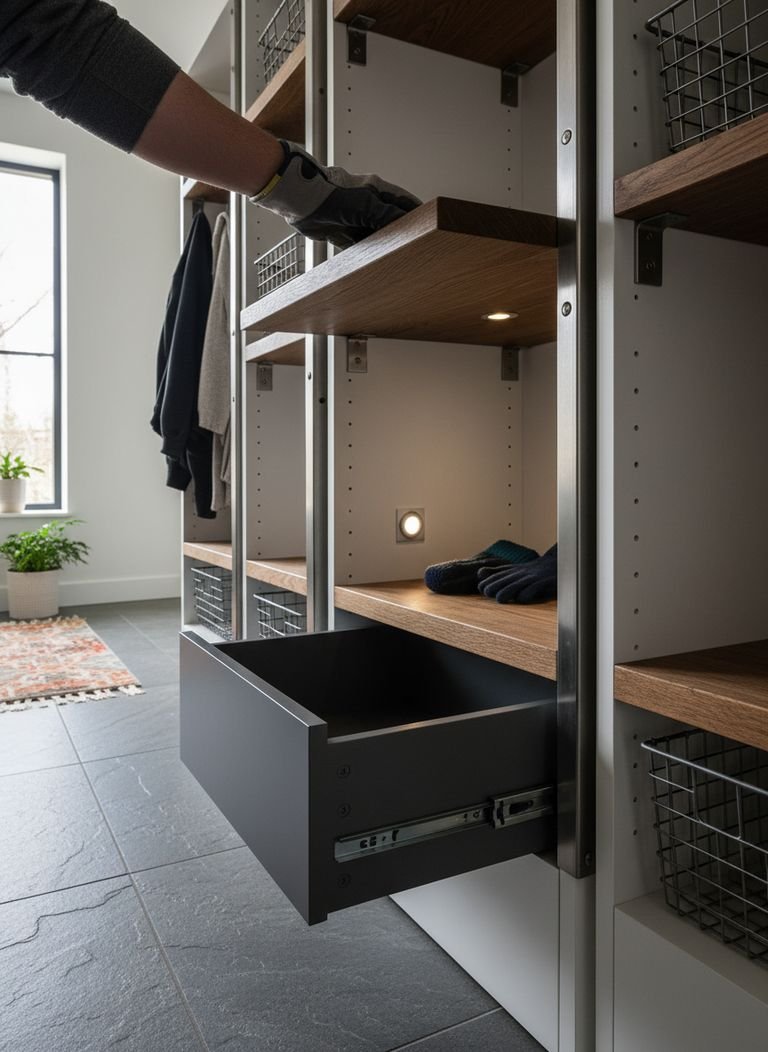
This principle of adaptability is the core of all modern storage, from modular bedroom furniture designed for small spaces to dynamic office solutions. Your entryway is no different. By choosing a system built for change, you invest in a piece of furniture that serves your family not just today, but for the next decade and beyond, making it the ultimate form of custom entryway lockers.
Engineered for Life: Durability and Smart Features Competitors Overlook
While flexibility is key, it’s meaningless without durability. The daily grind of a busy entryway—heavy backpacks dropped, wet boots kicked off, and multiple family members accessing it simultaneously—demands robust construction. This is a major pitfall of many budget-friendly options, which often rely on particleboard or MDF (medium-density fiberboard) that can sag, chip, and fail under consistent load.
Market data reveals that metal is the dominant material in the broader modular storage sector, capturing a significant 42.5% market share precisely for its superior load-bearing capabilities and adaptability. When planning your custom entryway lockers, prioritize systems built with steel frames, solid wood benches, and high-quality hardware. These materials withstand the abuse that entryways endure, ensuring your investment doesn’t become a wobbly, damaged eyesore in a few years.
Another area where most mudroom solutions fall short is smart technology integration. The entryway is a prime location for smart home enhancements, yet it’s an almost universally overlooked feature. Imagine cubbies with integrated, low-voltage USB charging ports for devices, ventilated lockers with a gentle warming function to dry wet gloves and hats, or occupancy-sensor LED lighting that illuminates your space as you approach. For homes with pets, a dedicated dog wash mudroom combo could feature smart ventilation that activates automatically to manage moisture and odors. While these features are rare, asking a manufacturer about custom electrical integration can set your project apart. If you’re planning a larger project, consulting with a smart home installation service can help future-proof your design.
| Material | Durability | Weight Capacity | Cost | Best For |
|---|---|---|---|---|
| Powder-Coated Steel | Very High | Excellent | High | High-traffic families, heavy gear, long-term investment. |
| Solid Wood (Oak, Maple) | High | Very Good | High | Traditional aesthetics, can be refinished, strong bench seating. |
| Plywood | Good | Good | Medium | Budget-conscious custom builds, requires good finishing. |
| MDF/Particleboard | Low | Poor | Low | Low-traffic areas, light use, not recommended for family mudrooms. |
Planning Your Perfect Drop Zone: Critical Specifications Consumers Often Miss
Success with modular mudroom cubbies lies in the details—specifications that are rarely advertised but make a world of difference in daily use. Unfortunately, research shows a clear lack of standardized technical data for residential cubbies, including critical metrics like cubby depth or weight capacity. This forces homeowners to become diligent planners.
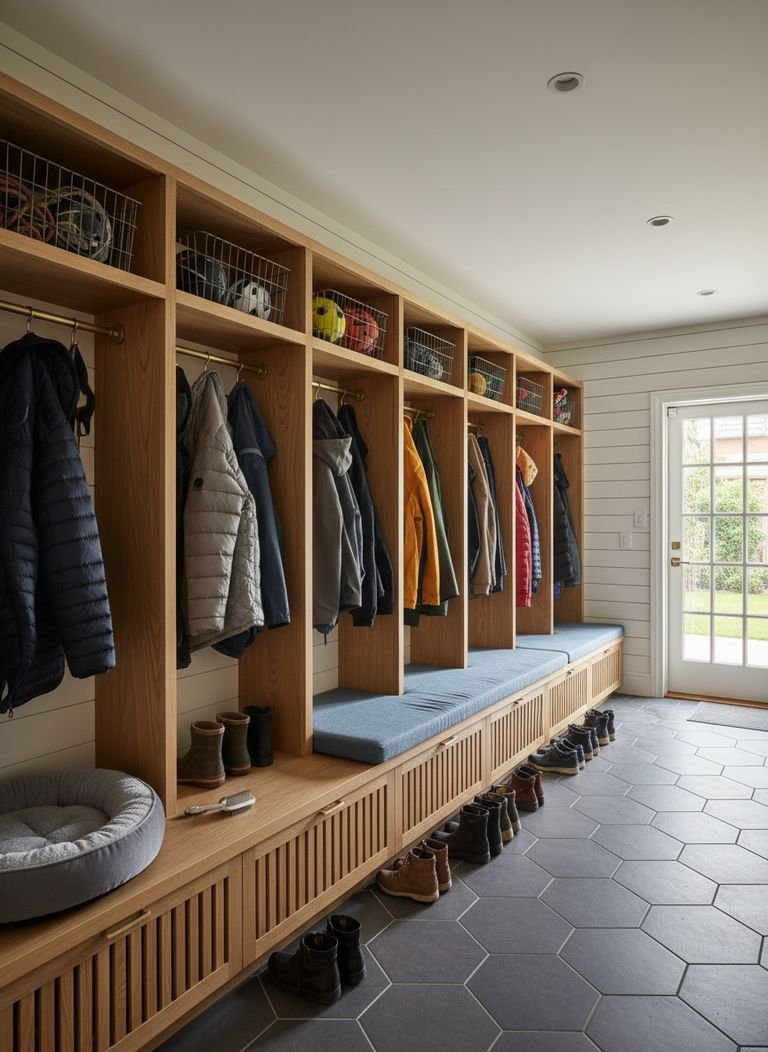
Here are the key specifications to investigate before you buy:
- Hook Weight Capacity: A single hook needs to support a heavy winter coat, a wet snowsuit, or a backpack loaded with textbooks. Look for systems with hooks bolted through the structure, not just screwed into a thin back panel. A good baseline is a capacity of 35-50 pounds per hook.
- Shelf and Bench Load Limits: The bench must safely support at least two adults, while upper shelves need to hold bins of seasonal gear without bowing. Again, with no industry standard, look to material strength as your guide. The dominance of metal in commercial racking for its load-bearing ability should inform your choice for residential drop zone storage ideas.
- Ventilation for Specialized Zones: If you’re incorporating a space for wet gear or a dog wash mudroom combo, passive ventilation is not enough. Plan for open-back designs, slatted shelving, or even integration with your home’s HVAC system to actively manage moisture and prevent mold and mildew.
- Component Dimensions: Beyond the overall footprint, consider the interior dimensions. Will a standard-size shoe tray fit in the bottom cubby? Is the locker wide enough for bulky sports equipment? These practical considerations separate a functional system from a frustrating one.
By focusing on these often-overlooked technical details, you can design a system that is not only beautiful but also works flawlessly for your family’s specific needs.
The Long-Term Investment: Why High-Quality Modular Cubbies Pay Off
Investing in a high-quality modular mudroom system is more than just a purchase; it’s a long-term upgrade to your home’s functionality and value. The benefits extend far beyond simple organization. In a world of increasing urbanization and smaller living spaces, optimized storage is a highly sought-after feature. A well-designed entryway system can be a significant selling point, signaling to potential buyers that the home is thoughtfully designed for modern family life.
This trend is reflected in the market’s trajectory. The broader modular storage system market is projected to grow from $4.14 billion in 2024 to approximately $4.34 billion in 2025, with residential demand for customized solutions being a key driver, as noted by Global Insight Services. This growth underscores the increasing value homeowners place on efficient, adaptable storage.
Ultimately, the biggest return on investment is the daily time and mental energy you save. No more frantic morning searches for a missing shoe, a lost set of keys, or the right jacket. By providing a logical home for everything, a system of organized entry cabinetry gives you back precious minutes and reduces household stress. A high-quality system of modular mudroom cubbies is a one-time investment that pays daily dividends in efficiency and peace of mind.
Transform Your Entryway: Finding Your Ideal Modular Mudroom Solution
Conquering entryway chaos requires more than just adding a few hooks and a bench. It demands a strategic approach centered on a system designed for the realities of a busy life. The solution is not just any storage, but one that is truly modular, exceptionally durable, and thoughtfully planned to meet your family’s specific needs—from the depth of the lockers to the strength of the hooks.
By prioritizing true modularity for future growth, demanding durable materials like steel and solid wood, and paying close attention to the technical specifications that ensure daily usability, you can move beyond temporary fixes. Don’t settle for inflexible, low-quality options that will only lead to future frustration.
Now is the time to find your ideal solution. Seek out manufacturers who offer genuine component-based systems, provide clear specifications, and understand the demands of a modern household. By making an informed choice, you can transform your entryway from a cluttered battleground into a streamlined, stress-free command center with modular mudroom cubbies that will serve your family for years to come.
Frequently Asked Questions About Modular Mudroom Cubbies
What is the main difference between modular and built-in mudroom cubbies?
The primary difference is flexibility. Built-in cubbies are custom-made for a specific space and are permanent fixtures. Modular mudroom cubbies are composed of individual, standardized components (lockers, benches, shelves) that can be configured, re-arranged, and added to over time, offering much greater adaptability as your family’s needs change.
How deep should a mudroom cubby be for adult coats?
For adult-sized winter coats on hangers, a minimum depth of 15 inches is recommended to prevent them from being crushed or sticking out. An ideal depth is 18 inches, which provides ample space for bulky outerwear and backpacks without compromising the walkway.
Are metal mudroom cubbies noisy?
High-quality metal cubbies are engineered to minimize noise. Look for features like soft-close hinges on doors, rubber or felt bumpers, and heavy-gauge steel construction. These elements significantly dampen the metallic “clang” often associated with old-school lockers, making them perfectly suitable for a residential environment.
Can I add to a modular cubby system later?
Yes, that is the core benefit of a truly modular system. Before purchasing, confirm with the manufacturer that they sell individual components and plan to keep the product line available for several years. This ensures you can expand your system with a matching locker or new shelving as your storage needs grow.
What’s the most important feature for a family with pets?
For families with pets, durability and cleanability are paramount. Look for a system with a waterproof or highly water-resistant bench and lower cubby surfaces. Incorporating an open-bottom locker for airflow to dry wet leashes and towels is also a great feature. If you’re planning a dog wash station, ensure the materials are non-porous and that there is adequate ventilation.