

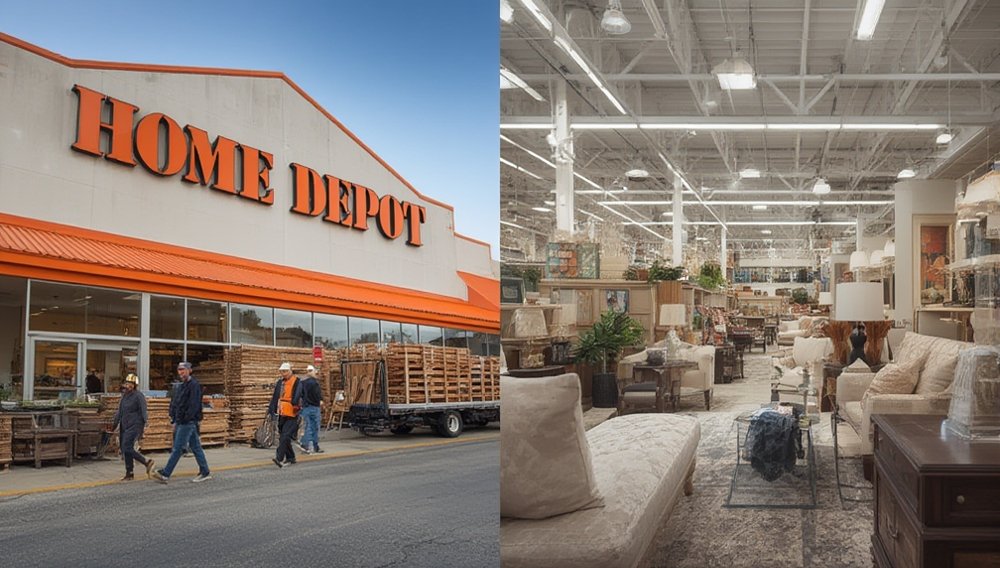
Home Depot and At Home occupy complementary niches in home improvement
Home Depot supplies tools, building materials and contractor services, while At Home focuses on large-format home décor, furnishings and seasonal accessories. This article examines their histories, product assortments, store experiences, online tools, and pricing strategies, and explains how homeowners can mix both retailers to plan, source, and complete better renovation and decorating projects.
Retailer profiles and business models: Home Depot vs At Home
Home Depot, founded in 1978 in Marietta, Georgia, is the world’s largest home improvement retailer. Headquartered in Atlanta, Georgia, the chain operates over 2,300 big-box stores across the United States, Canada, and Mexico. The stores typically exceed 100,000 square feet, designed for high-volume sales of building materials, tools, hardware, appliances, paint, plumbing, lawn and garden products, and related supplies. Signature services include equipment rental, key cutting, paint color matching, tool repair, special orders, delivery, and installation of major items (such as flooring, cabinets, or appliances).
At Home began as Garden Ridge Pottery in 1979 and rebranded as At Home in 2014. Its headquarters is located in Plano, Texas. At Home operates more than 250 large-format “home décor superstores” primarily across the United States. Each store typically occupies 80,000 to 120,000 square feet. Unlike Home Depot’s warehouse-style layout, At Home specializes in affordable home furnishings, offering an expansive self-service selection of furniture, decorative accessories, wall art, rugs, seasonal décor, textiles, kitchen and dining accents, patio products, and organizational items. Installation or delivery services are limited, focusing more on self-serve, carry-out purchases and impulse home refreshes.
Business Model Comparison: Home Depot
The retailer’s strategy centers on serving both DIY homeowners and professional contractors. Its model relies on massive bulk-buying power, deeply stocked inventory, and service support for complex renovation and repair projects. In contrast, At Home operates as a value-oriented, high-volume home décor and furniture retailer with everyday low prices and a “treasure hunt” shopping experience, primarily for consumers seeking to decorate or refresh interior spaces without breaking the bank.
Market Position and Target Customers: Home Depot
Home Depot targets a broad customer base—DIYers, skilled trade professionals, landlords, and property managers—who need comprehensive product lines for projects from minor repairs to full-scale construction. At Home, meanwhile, attracts homeowners, renters, and bargain-seeking decorators focused on redecorating, organizing, and accessorizing their spaces quickly and affordably.
Home Depot Signature Advantages
-
Pro services: Job site delivery, project estimating, contractor pricing.
-
Extensive tool rental: Access to construction, landscaping, and specialty tools.
-
Comprehensive project support: In-store experts, how-to clinics, and free design consultations.
At Home Signature Advantages
-
Variety and scale: Massive selection of on-trend décor and furniture in every category.
-
Everyday low prices: No membership required for deals, frequent promotional markdowns.
-
Quick style refresh: Easily mix-and-match accessories for fast, affordable room makeovers.
Understanding the core profiles and business models of Home Depot and At Home can help shoppers plan projects strategically, choosing the retailer that best fits specific aspects of the renovation or home décor process.
Product range layout and in-store experience at Home Depot
Comparing the product range and in-store experience at the home improvement giant and At Home starts with an understanding of what each store specializes in and how it caters to shopper needs on the sales floor.
Product assortment at Home Depot
Home Depot offers extensive categories such as building materials, tools, hardware, paint & stains, electrical, garden & outdoor living, appliances, and installation services. This makes it ideal for structural upgrades, DIY renovation, and home maintenance.
At Home: Focuses on furniture, decorative accessories, throw pillows and rugs, wall décor, textiles, lighting, faux plants, and highly seasonal displays. The store stands out for variety in style and price points for decor refreshes.
Store layout and merchandising differences
Home Depot: Features a grid aisle layout, bulk goods on pallets, overhead warehouse shelving, and clear category signage. The structure is optimized for locating construction items and tools quickly, but may require walking longer aisles for planning complete projects.
At Home: Arranges products into lifestyle “rooms” and thematic vignettes. Shoppers browse loosely organized category ‘islands’ with decor grouped by season, color, or collection, creating a more inspiration-driven path and easy visual curation.
Shopping scenarios: Home Depot & At Home
-
Kitchen cabinet project: Begin at Home Depot for cabinetry, installation hardware, paint, backsplashes, and measuring at the kitchen design desk.
-
Accent lighting & throw pillows: At Home is ideal for accent lamps, textiles, and on-trend pillows in multiple colorways and patterns.
-
Room refresh combining both: Use the store for painting, shelving, and tools; visit At Home for finishing touches like area rugs, vases, and art prints.
Tips for navigating Home Depot in-store resources
At Home Depot, locate floor associates in orange aprons for expert help on materials, measurements, or rentals. Utilize in-store paint matching desks and cabinet sample walls for precise planning.
At At Home, bring a tape measure and color swatches; browse display setups to visualize product combinations. Shop endcaps for deals and seasonal finds. Both retailers have efficient return counters near exits—keep receipts handy for returns or exchanges.
Example search phrases for Home Depot
-
“where to buy kitchen cabinets,” best power tools for DIY, “home improvement paint colors”
At Home: “affordable home décor store near me,” “large area rug deals,” “decorative pillows for living room”
Leveraging both stores strategically helps homeowners master everything from complex installs to stylish makeovers, making each trip more productive and satisfying.
Planning projects using Home Depot and At Home
Planning home renovation projects using both Home Depot and At Home creates a seamless workflow—leveraging each store’s unique strengths. Start by clarifying your goal, such as a bathroom refresh or living room makeover. Use this process to move from idea to completion efficiently:
Inspiration & Research
Browse home renovation checklists, design blogs, and both retailers’ websites for layout and style ideas. For a bathroom refresh, focus your vision: What is structural (like tile or vanities) versus decorative (mirrors, rugs, baskets)?
Budgeting and Material List Creation
Outline your total project cost. Estimate construction materials and installation supplies from Home Depot, then finishes and decorative items from At Home. Build two lists—one for tools and materials from the store (cement board, plumbing fittings, tile, paint, adhesive, saws), and a second for decor (towels, art, shower curtains, planters from At Home). This ensures you don’t forget essentials or overbuy accessories.
Sourcing, Scheduling, and Installation with Home Depot
Check stock and pricing online, flag must-have items, and note alternatives. Schedule Home Depot deliveries for structural items, and coordinate with trades or DIY timelines. For At Home, purchase decor after installation is done to avoid damage or style missteps. Use the retailer for guidance on installation best practices.
Styling with At Home
Once surfaces are finished, layer in your At Home decor. Arrange rugs, wall art, and storage to blend beauty with function—this is where decorator tips from in-store inspiration pay off.
Bathroom Refresh – What to buy where
-
Home Depot: Vanity, faucet, toilet, waterproof paint, lighting, tile, grout, underlayment
-
At Home: Shower curtain, decorative towels, wall art, bath mats, baskets, mirrors
Living Room Makeover – What to buy where
-
Home Depot: Area rug pad, shelving hardware, paint, electrical tools, wall anchors
-
At Home: Throw rugs, accent pillows, lamps, coffee table, vases, framed prints
Shopping Checklist Template
-
Measuring tape & room dimensions (record before you shop!)
-
List of required tools (from the store): drills, stud finder, levels
-
Material list: tile, boards, fasteners, paints (from Home Depot)
-
Decor checklist (from At Home): textiles, mirrors, planters, art
-
Swatches or color chips to match finishes
-
Return receipts and both stores’ loyalty cards
Coordination & Returns: Schedule Home Depot deliveries a day or two before starting your project; most decor from At Home can be taken home the same day. Keep original packaging and receipts until installation is complete.
Home Depot’s online shopping omnichannel and digital tools
Home Depot offers a robust digital and omnichannel shopping experience, empowering homeowners to streamline home improvement sourcing. Leveraging the retailer’s tech tools can shorten project timelines, prevent missed purchases, and boost satisfaction for both DIYers and seasoned renovators.
Home Depot’s Digital Edge
The website and mobile app feature real-time in-stock checks at local stores, helping you avoid wasted trips. Their “Buy Online, Pick Up In Store” (BOPIS) and curbside pickup options cover most building materials, power tools, and hardware. For bulk buys or large items, opt for “Ship to Store” or “Scheduled Delivery”. Extensive product listings offer specs, pro reviews, Q&A, how-to videos, and links to compatible tools/accessories. Use the barcode scanner in the app to check pricing and read reviews in-aisle, and track your purchase history and project lists across devices.
At Home’s Online Experience
At Home’s website supports robust inventory checks and same-day in-store pickup for most decorative pieces. Larger items like furniture ship to home or store, and style filters help you sort décor by trend, color, or season.
How to Search Effectively at Home Depot
On both sites, use descriptive, long-tail queries (e.g., “12v cordless drill for tile,” “boho throw pillow set”) for precise results. Sort by “best rated,” “most popular,” or filter by delivery method. Add meta descriptions under 160 characters, like “Shop lumber, tools and seasonal deals at Home Depot—real-time inventory and easy curbside pickup.”
For more information, visit Home Depot’s official website for tools, materials, and project planning resources.
Click here for more news.