

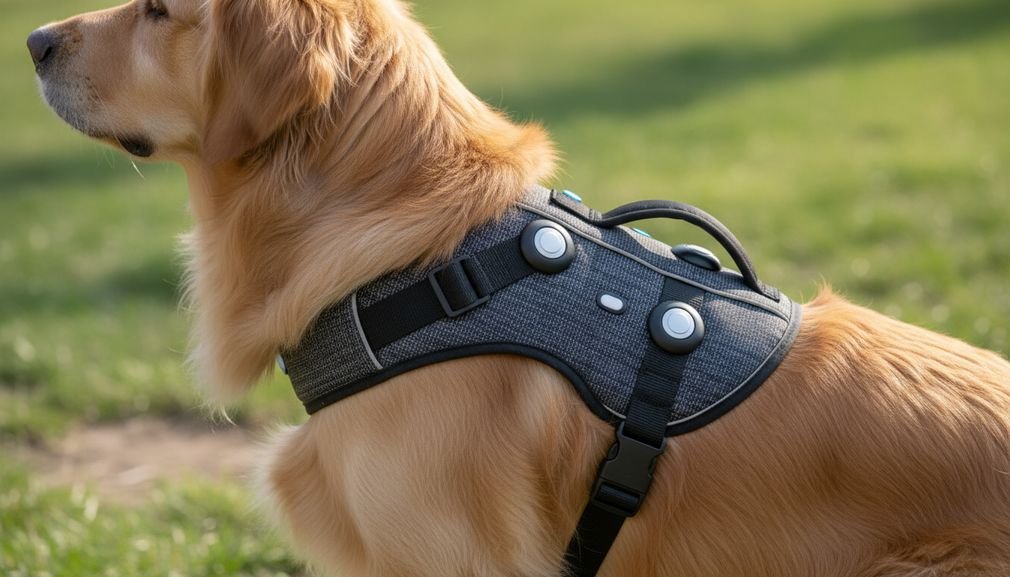
A Gait-Analysis Smart Harness represents a new frontier in proactive pet care, offering the potential to monitor your dog’s movement for subtle changes that could signal joint pain. As a devoted pet owner, especially for breeds prone to mobility issues, understanding this technology—both its promise and its current limitations—is crucial for making informed decisions about your companion’s long-term health and well-being.
Key Takeaways
- Gait-analysis smart harnesses are designed to track a dog’s movement patterns to provide early warnings for potential joint issues like arthritis or hip dysplasia.
- The technology is emerging within a rapidly growing pet wearables market, but there is currently no specific, publicly available clinical data to validate its accuracy for diagnosing conditions.
- Key information regarding costs, user experience, veterinary integration, and technical specifications for these specific devices is largely absent, requiring caution from early adopters.
- The Promise of Proactive Pet Care: What is a Gait-Analysis Smart Harness?
- Why Early Detection Matters for Your Pet’s Joint Health
- Understanding the Current Landscape: A Growing Market with Undefined Boundaries
- The Uncharted Territory: Crucial Gaps in Today’s Gait-Analysis Smart Harness Market
- The Future of Pet Mobility Tracking: What Needs to Happen
- Making an Informed Decision for Your Pet’s Health
- Frequently Asked Questions
The Promise of Proactive Pet Care: What is a Gait-Analysis Smart Harness?
A Gait-Analysis Smart Harness is an advanced pet mobility tracker equipped with sensors like accelerometers and gyroscopes. Unlike a standard GPS tracker that tells you where your pet is, this device focuses on how your pet moves. It collects data on stride length, balance, weight distribution, and overall movement patterns. The core idea is to establish a baseline of your dog’s normal gait and then flag subtle deviations over time. These small changes, often invisible to the human eye, can be the earliest indicators of discomfort, pain, or developing musculoskeletal conditions. For proactive owners, this technology promises a shift from reacting to visible pain to preventing its progression through early intervention.

Why Early Detection Matters for Your Pet’s Joint Health
Dogs are masters at hiding pain. It’s a survival instinct. By the time you notice a limp, stiffness, or reluctance to play, a condition like arthritis or hip dysplasia may have already progressed significantly. Early arthritis detection in a dog can dramatically improve their quality of life. When caught early, veterinarians can recommend management strategies such as joint supplements, weight management, physical therapy, or medication that can slow the disease’s progression and keep your pet comfortable and active for longer. A hip dysplasia monitor, in theory, could provide data that prompts an earlier veterinary consultation, leading to a diagnosis when more non-invasive treatment options are available. The goal of these devices is to bridge the gap between when a problem starts and when it becomes visibly obvious, giving you and your vet a crucial head start.
Understanding the Current Landscape: A Growing Market with Undefined Boundaries
The concept of an orthopedic pet wearable doesn’t exist in a vacuum. It’s part of the booming pet technology market. While specific market data for gait-analysis harnesses is not yet available, the general pet wearables market is projected to be a significant industry. Estimates suggest the market could reach between USD 3.14 billion and USD 4.16 billion in 2025, with strong projected growth rates around 10.9% to 13.6%. This rapid expansion, driven by technologies like GPS and basic activity tracking, creates a fertile ground for more specialized devices. However, it also means that new, unproven technologies can enter the market quickly, often before standards or validation processes are established. Consumers are seeing more options, like biometric smart collars, but must navigate a landscape where marketing claims often outpace scientific proof.

The Uncharted Territory: Crucial Gaps in Today’s Gait-Analysis Smart Harness Market
Despite the exciting potential, a deep dive into the available information reveals significant gaps. For a devoted pet owner, being aware of what is *not* known is just as important as understanding what the technology promises. The current market for the Gait-Analysis Smart Harness is a case study in emerging tech: a compelling idea facing a profound lack of public data across several critical areas.
Lack of Clinical Validation and Accuracy
The single most significant gap is the absence of independent, peer-reviewed clinical data. To be truly effective for early arthritis detection in a dog, a device needs proven accuracy. In medical terms, this is measured by sensitivity (the ability to correctly identify dogs with a condition) and specificity (the ability to correctly identify healthy dogs). Currently, public search results show “No reported clinical accuracy data (sensitivity/specificity) for gait-analysis harnesses in identifying early-stage arthritis or hip dysplasia.” Without these metrics, it’s impossible to know if the device is a reliable health tool or simply an interesting gadget.
Undocumented User Experience and Veterinary Integration
Technology is only useful if people can use it effectively. At present, there is a vacuum of public information on the user experience. The research shows “No customer reviews, veterinary feedback, or pain points on usability, data interpretation, or long-term reliability for gait-analysis smart harnesses are present.” Will owners find the app intuitive? Is the data presented in a way that a veterinarian can use? Is the harness comfortable and durable for daily wear? These fundamental questions remain unanswered, making it difficult to assess the practical value of these products. Proactive care also includes mental well-being, where tools like AI smart enrichment toys can play a role, but like physical monitors, their effectiveness depends on good design.
Transparency on Costs, Features, and Technical Specifications
A basic prerequisite for any purchasing decision is the ability to compare products. Yet, for this specific category, the market is opaque. The data clearly states there is “No data on upfront costs, subscription fees, or technical specifications (sensor types, battery life, data storage) for top gait-analysis smart harness brands.” Consumers cannot compare the price, subscription models, battery longevity, or the quality of the sensors used. This lack of transparency makes it challenging to determine value and pits unverified claims from one brand against another. While top general pet wearable players like Tractive and FitBark are known, this specialized sub-market lacks the same clarity according to market share analysis.
Unaddressed Advanced Features and Regulatory Oversight
Finally, the technology exists in a regulatory gray area. The research notes, “No industry standards, certifications (e.g., veterinary medical device clearance), or regulatory guidelines for pet health wearables… are mentioned.” This means companies can make preventative or diagnostic-adjacent claims without oversight from a body like the FDA or its European equivalent. Furthermore, advanced features that would add significant value, such as “predictive modeling, multi-pet tracking, or privacy implications,” are not yet prominent. For aging pets, a holistic approach that includes mental stimulation with cognitive enrichment toys is vital, and a truly advanced system would integrate various data points for a complete health picture.

The Future of Pet Mobility Tracking: What Needs to Happen
For the gait-analysis smart harness to move from a niche gadget to a trusted tool in veterinary and home care, several things need to happen. First and foremost, companies must invest in and publish independent clinical trials to validate their technology. This is the bedrock of trust. Second, they need to focus on the user experience for both owners and veterinarians, creating intuitive interfaces and actionable reports. Third, transparent pricing and clear technical specifications must become the industry standard. Finally, as these devices become more sophisticated, a framework for regulatory oversight will be necessary to protect consumers and their pets from misleading health claims. The potential for integration into veterinary practice is immense; one report notes that the commercial segment of pet tech is growing, driven by adoption in clinics for efficiency in applications like post-surgical rehab or pain management assessment, though details on current use are sparse.
Making an Informed Decision for Your Pet’s Health
The Gait-Analysis Smart Harness holds incredible promise for the future of proactive pet health. The ability to collect objective, long-term mobility data could revolutionize how we approach joint health in our canine companions. However, in its current state, the technology exists in an information vacuum. The lack of clinical validation, user feedback, and transparent data means that early adoption comes with significant uncertainty. As a discerning pet owner, the best approach is one of cautious optimism. View these devices as a potential supplement to, but not a replacement for, your own careful observation and regular veterinary care.
Before investing in any new technology, a conversation with your veterinarian is essential. They can help you understand the data and integrate it into a holistic wellness plan. Creating a healthy and safe home environment remains one of the most impactful things you can do for your pet’s mobility. Ultimately, the most powerful tool in your pet’s healthcare is your partnership with a trusted veterinary professional, and a Gait-Analysis Smart Harness may one day become a valuable part of that toolkit.
Frequently Asked Questions
What does a gait-analysis smart harness actually measure?
A gait-analysis smart harness uses built-in sensors, typically accelerometers and gyroscopes, to measure various aspects of your dog’s movement. This can include stride length, step consistency, balance, weight distribution while in motion, and overall activity levels. The goal is to create a detailed picture of your pet’s unique way of moving to detect changes over time.
Can a gait-analysis smart harness replace a visit to the veterinarian?
Absolutely not. This technology is intended to be a monitoring tool, not a diagnostic one. Any data or alerts from the device should be seen as a reason to consult your veterinarian. It cannot diagnose conditions like arthritis or hip dysplasia; only a qualified vet can do that through a physical exam and imaging like X-rays.
Are there any clinically validated pet mobility trackers available?
Based on currently available public information, there are no gait-analysis smart harnesses that have published independent, peer-reviewed clinical accuracy data (like sensitivity and specificity) for the early detection of joint conditions. While some companies may have internal data, it is not publicly validated.
How much does a gait-analysis smart harness cost?
This information is surprisingly difficult to find. The market currently lacks transparency, with no clear public data on the upfront costs of the devices, recurring subscription fees for data access, or detailed technical specifications. Consumers cannot easily compare different brands on price or features at this time.
Is a gait-analysis smart harness worth it today?
It depends on your expectations. If you are an early adopter who is comfortable with unproven technology and wants to gather supplemental data to discuss with your vet, it might be an interesting tool. However, for most pet owners, it is likely better to wait until the technology is clinically validated and more information on user experience and cost becomes available.