

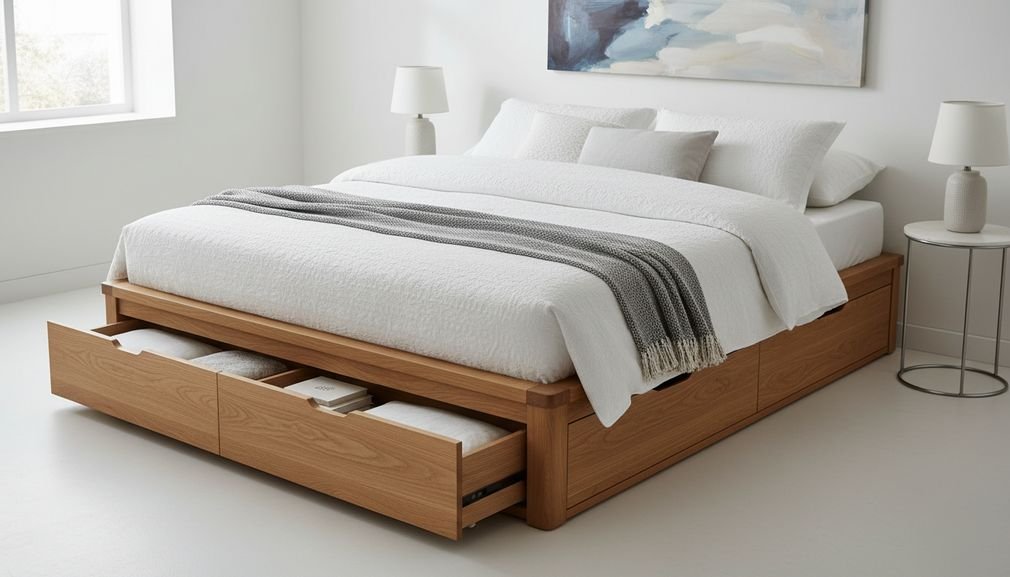
A bed frame with storage drawers is more than just a place to sleep; it’s a strategic investment in maximizing your living area, especially when every square foot counts. This guide provides the critical, unfiltered information other reviews miss, empowering you to choose a frame that delivers both style and long term functionality.
Key Takeaways
- Focus on technical specifications that define durability, such as individual drawer weight capacity and the type of drawer runners (ball bearing vs. roller).
- The price of a storage bed is heavily influenced by its material. Solid wood offers the best longevity but at a higher cost, while metal frames are a fast growing, durable alternative.
- Consider your floor type. Drawers may be difficult to open on high pile carpet without sufficient frame clearance, a detail often omitted from product descriptions.
- Reclaim Your Space: Why a Storage Bed Frame is Your Urban Living Essential
- The Hidden Truth: What Other Guides Miss About Bed Frames with Storage Drawers
- Deep Dive: Bed Frames with Integrated Drawers
- Exploring Alternatives: Hydraulic Lift Beds vs. Ottoman Bed Frames
- Making Your Choice: The Ultimate Buying Checklist
- Conclusion: Your Clutter-Free Dream Bedroom Awaits
- Frequently Asked Questions
Reclaim Your Space: Why a Storage Bed Frame is Your Urban Living Essential
In modern urban living, space is the ultimate luxury. The demand for multi functional, space saving solutions has driven significant growth in the storage bed market. Consumers are actively seeking ways to eliminate clutter without sacrificing style, making the storage bed frame a cornerstone of efficient bedroom design. According to market analysis, the Bed With Storage Market, valued at USD 22.12 billion in 2024, is projected to reach USD 32.97 billion by 2032, highlighting a strong and sustained consumer shift toward smarter furniture. This isn’t just a trend; it’s a practical response to the reality of smaller living spaces.

The Hidden Truth: What Other Guides Miss About Bed Frames with Storage Drawers
Most buying guides focus on aesthetics and generic benefits, leaving you unprepared for the practical realities of owning a bed frame with storage drawers. They consistently overlook the technical details that determine a product’s true value and longevity. This guide addresses those gaps, focusing on the specifications and real world concerns that matter. We move beyond simple descriptions of under bed storage solutions to provide a detailed analysis of what makes a storage bed a worthwhile investment versus a future headache. The top search results for this topic fail to provide a consolidated view of drawer weight capacity, assembly times, or comparative pricing breakdowns by material, which are critical for an informed decision.
Essential Technical Specifications You Must Ask For
Before you buy, you must scrutinize the technical details that manufacturers often bury. These specifications directly impact the bed’s usability and lifespan. Don’t settle for vague descriptions; demand concrete numbers.
- Individual Drawer Weight Capacity: This is the single most important metric for durability. A low capacity (under 20 lbs) suggests weaker materials and construction, suitable only for light linens. For items like sweaters, jeans, or books, look for a capacity of 40 lbs or more per drawer.
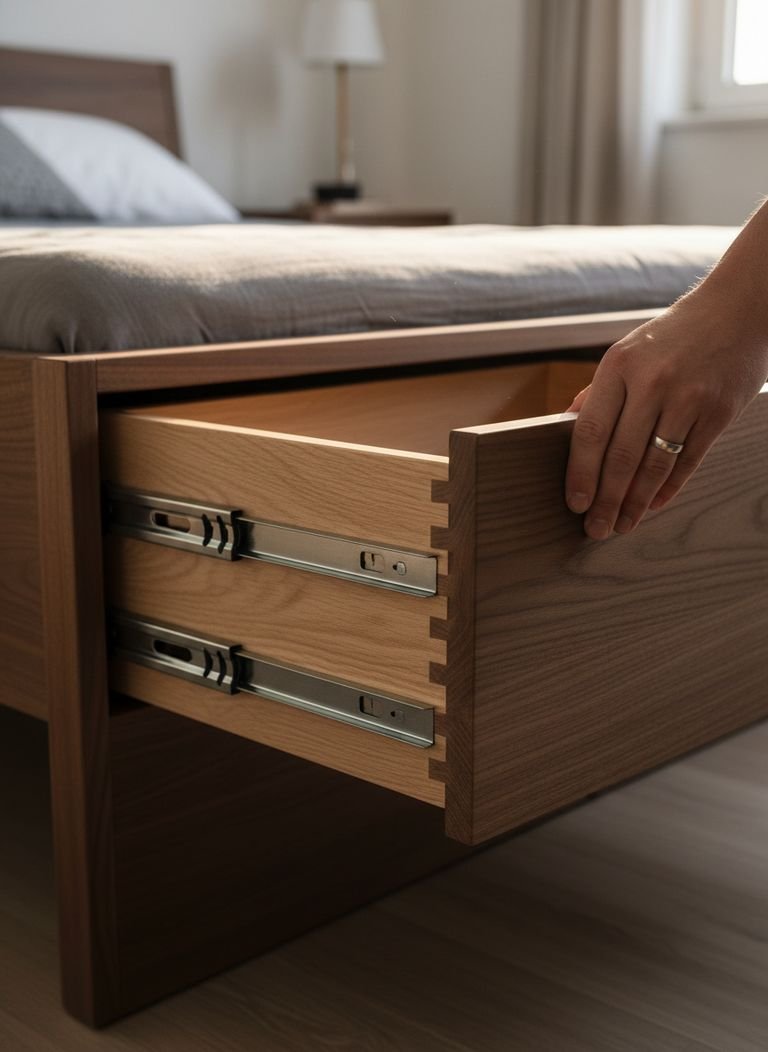
- Drawer Runner Quality: The mechanism defines the user experience. Center mount roller slides are common in budget options but are prone to misalignment. Side mount ball bearing slides offer a much smoother, more stable operation and can handle more weight. Full extension slides allow you to access the entire drawer, maximizing your storage.
- Required Floor Clearance: Measure the clearance from the bottom of the drawer to the floor. A minimal clearance of 1 inch is necessary for low pile carpet or hard floors. For medium to high pile carpet, you need at least 1.5-2 inches to prevent the drawer from snagging and dragging.
- Assembly Time and Complexity: Look for user reviews or manufacturer estimates on assembly time. A storage bed can be significantly more complex to build than a standard frame. An estimated assembly time of over 3 hours for one person suggests a more difficult process. Well written instructions and clearly labeled parts are crucial.
Beyond the Gloss: Real-World Durability & Maintenance Concerns
The showroom model always looks perfect, but daily use reveals a different story. Understanding potential durability and maintenance issues will help you select a frame that stands up to real life. These are the common complaints that competitors’ guides ignore but are vital for long term satisfaction.
- Drawer Mechanism Durability: The drawer slides and drawer bottoms are the most common points of failure. Look for frames with metal slides and reinforced drawer bottoms (a center support rail is a good sign). Avoid frames where the drawer bottom is just a thin piece of particleboard slid into grooves.
- Dust Accumulation: The space under a bed is a natural dust magnet. While drawers offer protection, dust can still accumulate on the tracks and around the drawer faces. Frames with a tighter fit between the drawer and the frame itself offer better protection. Occasional vacuuming with a crevice tool is essential maintenance.
- Access on Different Floor Types: As mentioned, high pile carpet is the enemy of low clearance drawers. Some designs feature wheels on the drawers instead of slides; these are often better for carpeted floors but can be less stable.
Deconstructing the Cost: What Influences the Price of Your Storage Bed
The price range for storage beds is vast, and understanding what you’re paying for is key. The material is the primary cost driver. According to market reports, wood products held the largest market share in 2024, valued at USD 6.12 billion, while metal frames are projected to be the fastest growing segment. This data reflects consumer preference for wood’s classic appeal and metal’s emerging modern aesthetic and durability.
- Laminate/Particleboard (Queen: $300 – $700): The most affordable option. Prone to chipping and water damage. The drawer mechanisms are typically basic. Best for temporary situations or very light use.
- Upholstered (Queen: $600 – $1,200): Offers a softer look. The frame underneath is usually wood or metal. Quality varies wildly, so check the frame material and drawer construction. Fabric requires more maintenance to keep clean.
- Metal (Queen: $500 – $1,000): Durable and offers a modern, industrial look. Less prone to wear and tear but can be noisy if not well constructed. Check for solid welds and a sturdy slat system.
- Solid Wood Storage Bed (Queen: $900 – $2,500+): The most durable and expensive option. Pine is a softer, more affordable wood, while oak, acacia, and walnut are hardwoods that offer superior longevity. A solid dark wood furniture piece can last for decades.
Deep Dive: Bed Frames with Integrated Drawers
Bed frames with built-in drawers are a distinct category of storage bed, prized for organization. Unlike an open cavern of storage, drawers allow you to compartmentalize clothing, shoes, and extra bedding, making items easy to find. This design accounts for a significant portion of the storage bed market, which itself is about 10% of all bed frame types, driven by high demand in space limited urban areas. The primary advantage is structured, accessible storage. However, the main drawback is the required clearance; you need enough space on each side of the bed to fully extend the drawers, which can be a challenge in narrow rooms. For those tight spaces, exploring other space saving furniture for small apartments can offer clever solutions.
Exploring Alternatives: Hydraulic Lift Beds vs. Ottoman Bed Frames
While drawers are excellent for organization, hydraulic lift (ottoman) beds excel at maximizing raw storage volume. With approximately 60% of consumers seeking space saving designs due to urbanization, understanding all options is critical. A hydraulic mechanism lifts the entire mattress base, revealing a single, large storage compartment equivalent to a massive chest. This makes them ideal for storing bulky items like luggage, seasonal duvets, or sports equipment. However, accessing this space requires lifting the mattress, making it less convenient for frequently used items.
| Feature | Drawer Beds | Hydraulic Lift (Ottoman) Beds |
|---|---|---|
| Best For | Organizing frequently accessed items like clothing, shoes, and daily linens. | Storing large, bulky, or seasonal items like luggage, duvets, and winter coats. |
| Storage Access | Quick and easy daily access without moving the mattress. | Requires lifting the entire mattress; less convenient for daily access. |
| Storage Volume | Moderate, divided into smaller compartments. | Maximum, utilizing the entire under bed footprint. |
| Space Requirement | Needs clear floor space on sides/foot of bed to open drawers. | No extra floor space needed; ideal for tight rooms where drawers can’t open. |
| Potential Downside | Drawers can be difficult on thick carpet; less total volume. | Risk of hydraulic mechanism failure over time; items can become disorganized. |
Making Your Choice: The Ultimate Buying Checklist
Use this storage bed frame buying guide to ensure you’ve covered all your bases before making a final decision. Answering these questions will prevent common regrets and lead you to the perfect frame for your specific needs.
- Measure Your Space Accurately: Do you have enough room to fully extend the drawers? (A typical drawer needs 18-22 inches of clearance).
- Assess Your Flooring: Is your floor hardwood, low pile, or high pile carpet? Check the frame’s clearance to ensure functionality.
- Define Your Storage Needs: Will you be storing heavy items or light linens? Verify the drawer weight capacity. Consider a hybrid mattress which can be heavy, and ensure the frame itself is robust.
- Evaluate the Material vs. Budget: Are you prioritizing longevity (solid wood) or affordability (laminate/metal)? How does this choice fit your budget?
- Check the Slat System: How far apart are the slats? For most modern mattresses, slats should be no more than 3 inches apart to provide adequate support and prevent sagging.
- Read Assembly Reviews: Are other buyers reporting missing parts or confusing instructions? Is this a project you can realistically tackle yourself?
- Understand the Warranty: What does the warranty cover? Specifically, does it include the drawer mechanisms or just the frame structure? A solid warranty is often indicative of quality, similar to how you would evaluate options when choosing between Ashley Furniture and Bob’s.

Conclusion: Your Clutter-Free Dream Bedroom Awaits
Choosing the right storage bed is a critical step towards creating a more organized, spacious, and functional bedroom. By looking past marketing claims and focusing on the crucial technical details—drawer capacity, runner quality, material, and floor clearance—you can avoid common pitfalls and invest in a piece of furniture that truly serves your needs. The market for storage beds is strong and growing, with projections showing a value of nearly USD 33 billion by 2032 for a reason: it’s a smart solution for modern life.
Armed with this detailed guide, you are now equipped to select a bed frame with storage drawers that will not only save space but also stand the test of time. Make an informed choice and enjoy the peace of a clutter-free sanctuary.
Frequently Asked Questions
Can a bed frame with storage drawers be used with an adjustable base?
Generally, no. Most bed frames with integrated storage drawers have a platform base with slats that would interfere with the mechanism of an adjustable base. You would need to find a specific “platform adjustable base” that can sit inside the frame, but these are uncommon and require precise measurements.
How much weight can storage bed drawers typically hold?
Weight capacity varies significantly by price and material. Budget models made from particleboard may only hold 15-20 pounds per drawer. Mid-range to high-end models, especially those made of solid wood with reinforced bottoms, can often hold 40-60 pounds or more per drawer. Always check the manufacturer’s specifications.
Are storage beds noisy or prone to squeaking?
A well-constructed storage bed should be silent. Noise or squeaking usually comes from loose joints. Look for frames that use sturdy metal-on-metal hardware (bolts and brackets) rather than just screws into wood. Regularly checking and tightening hardware can prevent noise from developing over time.
Do items stored in under bed drawers get dusty?
Yes, but significantly less so than items stored in open space under a traditional bed. Dust can still settle on the drawer fronts and may seep in through small gaps. Frames with a more seamless design where the drawer face sits flush against the frame offer the best protection. Regular cleaning around the frame is still recommended.
Is it difficult to assemble a bed frame with storage drawers?
Assembly is typically more complex and time-consuming than a standard bed frame due to the multiple components of the drawers and their slides. Expect assembly to take 2-4 hours with two people. It is highly recommended to read the instructions thoroughly before starting and to organize all parts and hardware.