

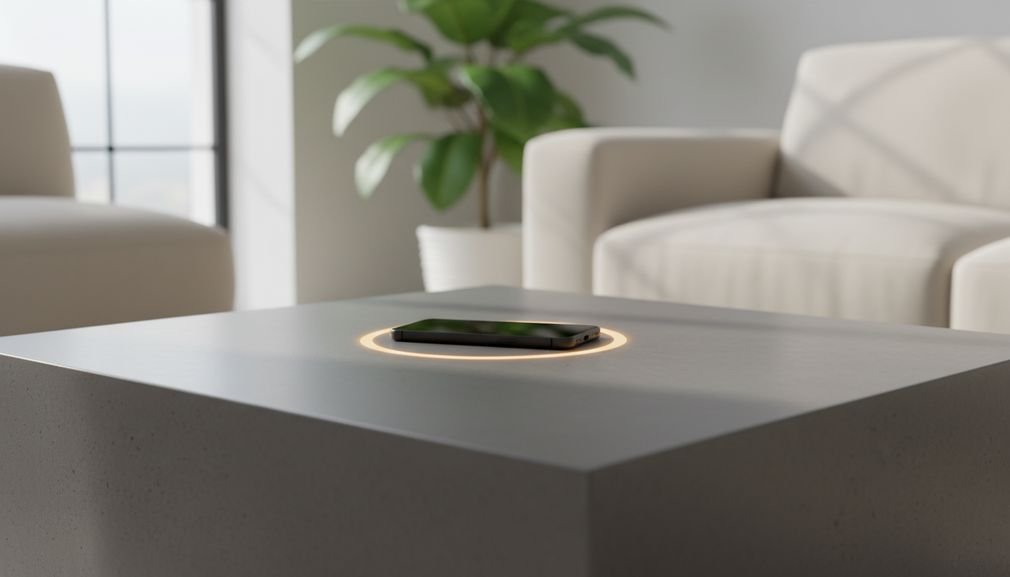
Finding the right smart furniture with charging ports can feel like navigating a new frontier, promising sleek convenience but offering very little data on performance, safety, or long term value. This guide cuts through the marketing noise to give you the critical questions and technical checkpoints you need to make a purchase you won’t regret, ensuring your investment is both safe and future proof.
Key Takeaways
- Technical Specifications Are Paramount: Don’t be swayed by looks alone. Demand specifics on USB-C Power Delivery (PD) wattage and Qi wireless charging speeds (15W+) to ensure your furniture can actually fast charge modern devices.
- Safety Certifications Are Non-Negotiable: The integrated electronics must have safety certifications like UL, CE, or FCC. A lack of these is a major red flag for potential fire or electrical hazards.
- The Market Lacks Transparency: There is virtually no public data on failure rates, common complaints, or repairability. This makes it essential for you to investigate warranty, port durability, and the modularity of the tech components before buying.
- Embracing the Future: What is Smart Furniture with Charging Ports?
- Where Smart Tech Charges Up First: Desks and Coffee Tables Lead the Way
- Beyond the Hype: Essential Questions for Smart Furniture Buyers
- The Investment: Is Smart Furniture with Charging Ports Worth the Price Tag?
- Conclusion: Making an Informed Decision
- Frequently Asked Questions
Embracing the Future: What is Smart Furniture with Charging Ports?
At its core, smart furniture with charging ports is about seamless integration. It’s the evolution of traditional furniture into a functional hub for our digital lives. This category of tech integrated furniture embeds power solutions like USB-A, USB-C, and wireless charging pads directly into the surfaces we use every day, eliminating the clutter of cables and power bricks. The appeal is undeniable: a clean, minimalist aesthetic with the utility of having power exactly where you need it, whether you’re working at your desk, relaxing on the sofa, or setting a drink down on your end table. The market is responding to this demand, with some projections showing the general smart furniture industry growing to over USD 779 million by 2029 at a compound annual growth rate of 18.5% (Maximize Market Research). This growth signifies a clear shift towards homes and offices that are as connected and efficient as the devices we use.
Where Smart Tech Charges Up First: Desks and Coffee Tables Lead the Way
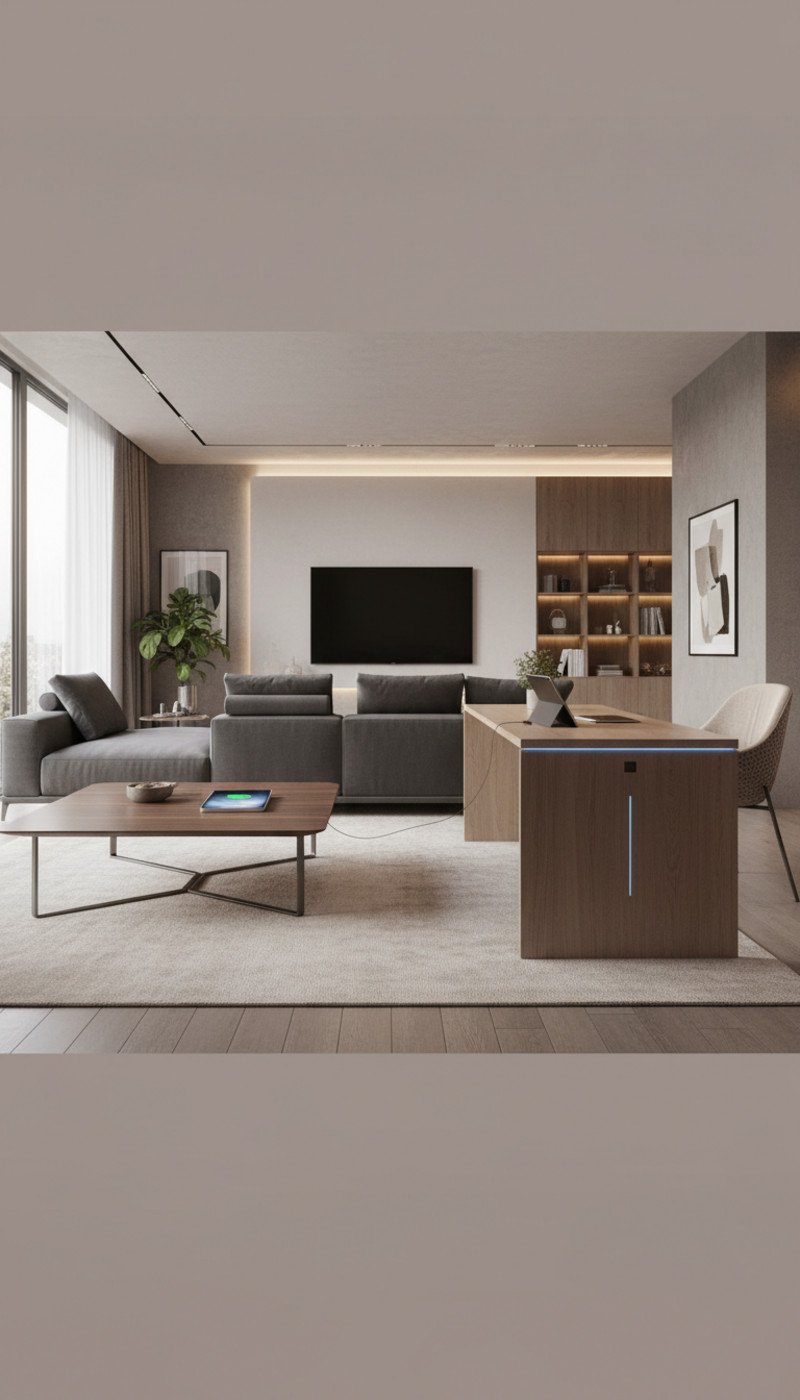
While the concept of integrated charging can apply to almost any piece of furniture, the technology is currently most prevalent and practical in a few key areas. Smart desks and coffee tables are the clear frontrunners, driven by our natural behavior patterns. We spend hours at our desks with laptops, phones, and accessories, making built in power a logical and highly valued feature. In fact, smart desks captured the largest revenue share of the general smart furniture market in 2024 at 34.0%, largely due to features like integrated charging ports (Grand View Research).
Similarly, the living room coffee table has become a central docking station for the family’s devices. A smart coffee table with a wireless charging surface and accessible USB ports transforms it from a passive piece of decor into an active, functional hub. Nightstands are another rapidly growing segment, offering the convenience of overnight charging without fumbling for cables in the dark. As consumers demand more streamlined living spaces, expect to see the wireless charging desk and other powered furniture become standard offerings rather than niche gadgets. The key is to find furniture that complements your existing routines, like a modular bedroom furniture setup that includes smart nightstands.
Beyond the Hype: Essential Questions for Smart Furniture Buyers
The most significant challenge when shopping for smart furniture with charging ports is the complete lack of transparent, third party data. Our research found no verifiable information on common consumer complaints, negative reviews, long term failure rates, or even basic performance benchmarks. This information void means the burden of due diligence falls entirely on you, the buyer. To navigate this opaque market, you must become an investigator, asking manufacturers and retailers pointed questions before you commit. The answers will reveal the true quality and longevity of the product far better than any marketing copy.
Powering Your Devices: What Charging Standards and Speeds to Demand
Not all charging ports are created equal. An underpowered port can be more frustrating than no port at all. Given that market research provides no specific guidance on technical standards (Maximize Market Research), you must demand these details yourself. For any furniture with USB ports, especially USB-C, ask for the Power Delivery (PD) wattage. A standard 5-10W port is fine for trickle charging a phone overnight, but it won’t power a laptop. For a wireless charging desk to be truly useful, look for a USB-C PD port that delivers at least 65W to charge modern notebooks.
For wireless charging, the standard to look for is Qi (pronounced “chee”). But again, the speed matters. Insist on at least 15W for fast wireless charging for compatible Android and iPhone models. Don’t settle for a vague “wireless charging included” statement. Ask if it’s Qi certified and what the maximum power output is. Also, inquire about compatibility with specific protocols like Apple’s MagSafe. A lower 5W or 7.5W charger will be painfully slow for modern devices, making the integrated feature nearly obsolete. Properly integrating these features often requires expert setup, a topic covered in our guide to smart home installation services.
Built to Last? Durability, Safety, and Long-Term Reliability
A piece of furniture is a long term investment, but the embedded electronics might not be. This is where you must probe on durability and repairability. What happens if a USB port becomes loose or stops working after a year? Is the charging module a self contained unit that can be easily replaced, or is it permanently integrated into the furniture, requiring a complete replacement? Ask about the warranty for the electronic components specifically, as it may be shorter than the warranty for the furniture itself.
Most importantly, you must verify the safety of the electronics. Since no publicly available data specifies essential safety certifications for these products, you must look for the marks yourself. Check the product, packaging, or manual for certifications like UL (Underwriter Laboratories), CE (Conformité Européenne), or FCC (Federal Communications Commission). These marks indicate that the electronic components have been tested for safety against fire, electrical shock, and other hazards. Buying an uncertified piece of powered furniture is a significant risk to your home and devices. When considering longevity, also think about the materials of the furniture itself. Choosing pieces made from recycled furniture materials can be a great way to ensure both durability and sustainability.
The Investment: Is Smart Furniture with Charging Ports Worth the Price Tag?
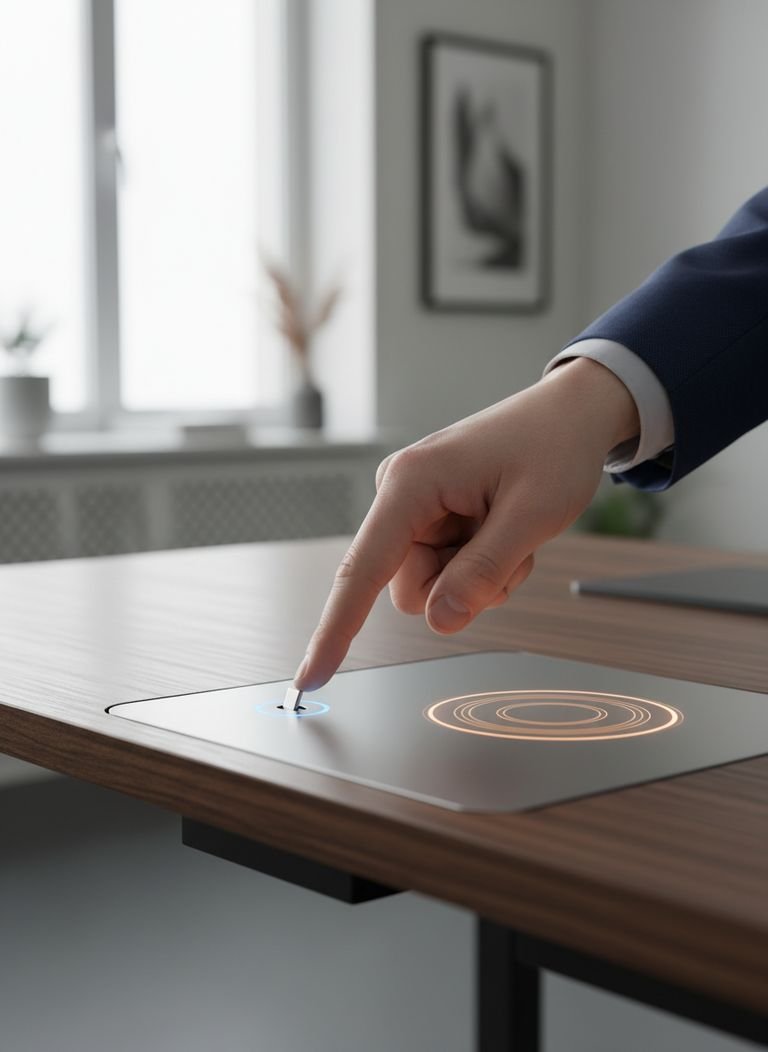
Determining the value of smart furniture is tricky because the market lacks pricing data that compares integrated options against their non smart counterparts. There are no clear benchmarks for what a high quality smart coffee table should cost versus a standard one plus the price of a premium standalone charging station. Therefore, the value proposition is highly subjective and depends on your personal priorities. You are paying a premium for the convenience of integration and the aesthetic benefit of a clutter free space.
To assess the cost effectiveness for yourself, do a simple comparison. Find a piece of smart furniture you like. Then, find a non smart piece with similar quality, materials, and design. Finally, price out a high quality, multi port charging hub with the same specs you’d demand from the smart version (e.g., a 65W+ USB-C PD port, multiple USB-A ports, and a 15W Qi wireless charger). Add the cost of the non smart furniture and the charging hub together. This total will often be less than the price of the integrated piece. The difference is the premium you are paying for seamless integration. For some, the elegance and convenience are well worth the extra cost. For others, the flexibility and lower price of a separate system make more sense. This decision process is similar to choosing any home upgrade, like deciding between different smart modular lighting systems; it’s about balancing cost, aesthetics, and functionality.
Conclusion: Making an Informed Decision
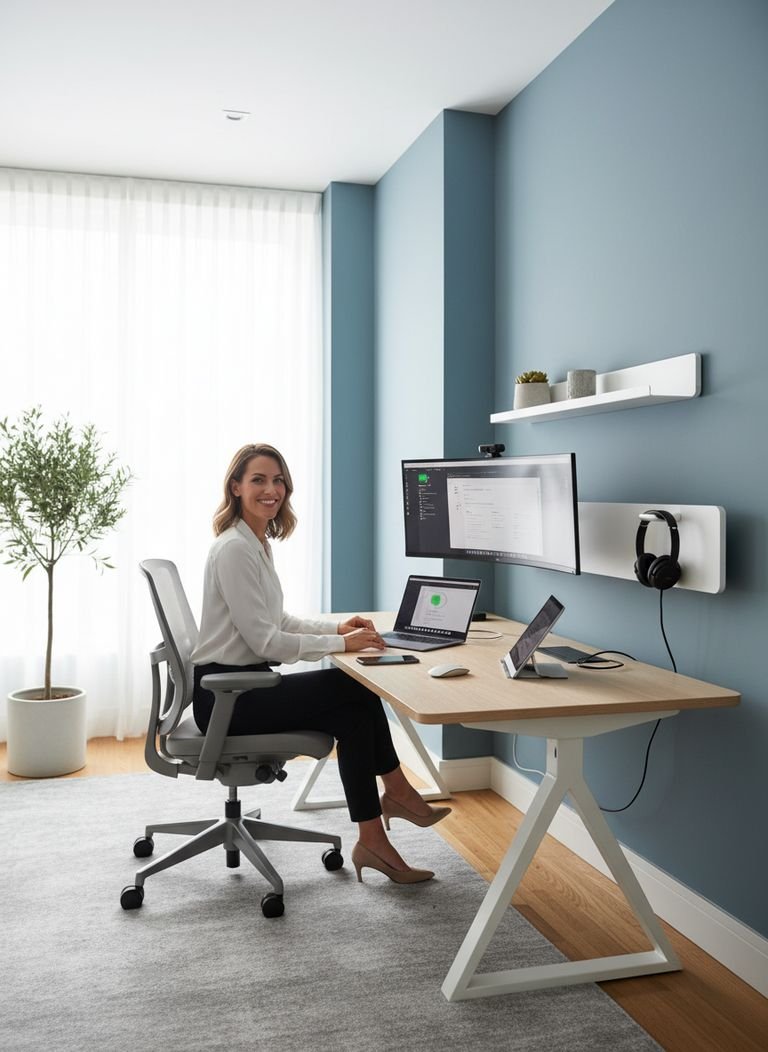
The world of smart furniture with charging ports is exciting and full of potential for a more convenient, streamlined life. However, it’s a nascent market where marketing claims often outpace proven performance and reliability. By arming yourself with the right questions, you can cut through the hype and evaluate a product based on its technical merits, safety certifications, and long term viability. Don’t be afraid to demand specifics on power output, ask about the repairability of the tech, and walk away if you can’t find proof of safety testing. By prioritizing these fundamentals, you can confidently invest in smart furniture with charging ports that truly enhances your space for years to come.
Frequently Asked Questions
What are the most important specs for smart furniture charging ports?
The two most critical specifications are USB-C Power Delivery (PD) wattage and Qi wireless charging speed. For USB-C, look for at least 65W if you plan to charge a laptop. For wireless charging, demand a 15W Qi certified pad for modern fast charging. Anything less will be frustratingly slow for current devices.
Is smart furniture with charging ports reliable in the long term?
There is currently no public data on long term reliability or failure rates. Because of this, it is crucial to investigate the warranty (specifically for the electronic parts), inquire about the durability of the ports, and ask if the charging module is replaceable. A product with a strong warranty and a modular design is a safer long term bet.
Can I charge my laptop with a smart desk?
Yes, but only if the desk is equipped with a high wattage USB-C Power Delivery (PD) port. You must verify that the port supplies at least 65W, though 100W is preferable for more powerful laptops. A standard USB-A or low wattage USB-C port will not be sufficient to charge a notebook computer.
What safety certifications should I look for on smart furniture?
You should always look for proof that the electronic components are certified by a recognized testing laboratory. The most common marks to look for in North America and Europe are UL (Underwriter Laboratories), CE (Conformité Européenne), and FCC. These certifications indicate the product has met critical safety standards for fire and electrical hazards.