

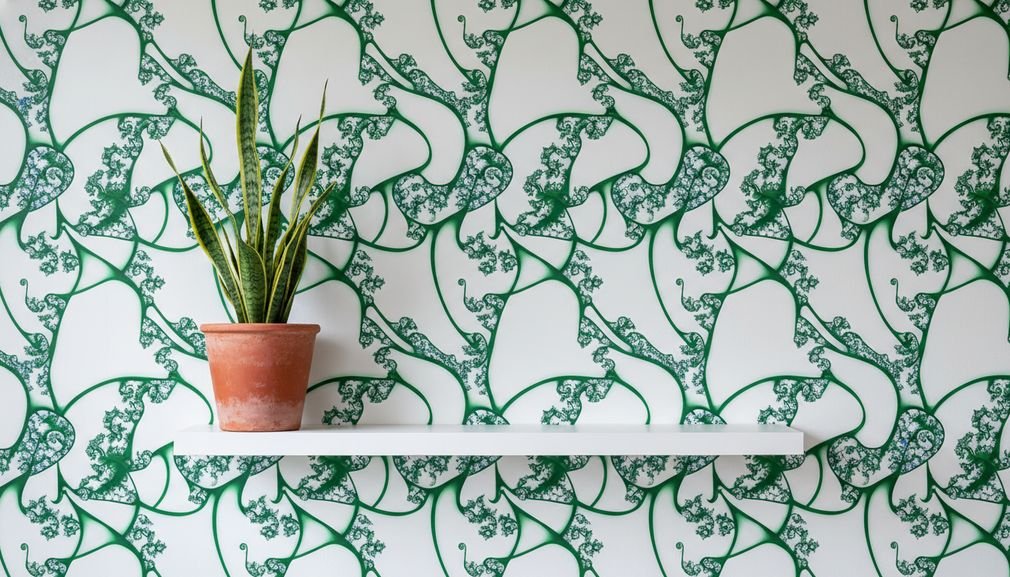
Using a scientifically chosen Fractal Pattern Wallpaper is one of the most effective ways to transform your home office from a source of stress into a sanctuary of focus and calm. Unlike standard decor, these patterns are rooted in biophilic design, leveraging nature’s mathematical code to directly engage your brain’s aesthetic and cognitive systems. This guide breaks down the science, provides actionable steps for selection, and helps you create a workspace that doesn’t just look good, but actively works for you.
Key Takeaways
- Target Specific Fractals: For optimal stress reduction and focus, choose fractal patterns with a “mid-range” complexity, specifically a fractal dimension (D) between 1.3 and 1.5. These mimic natural forms like clouds, coastlines, and ferns.
- Science-Backed Benefits: Research shows these specific patterns can significantly lower physiological stress markers and enhance cognitive functions like working memory and attention by activating the prefrontal cortex.
- Prioritize Sustainability: To create a truly wellness-focused space, select biophilic wall coverings made from eco-friendly materials with certifications like FSC (Forest Stewardship Council) or Greenguard, ensuring low VOCs and a minimal environmental footprint.
- Transform Your Home Office: The Science of Fractal Pattern Wallpaper for Stress Reduction
- Decoding Nature’s Secret: Why Mid-D Fractals Boost Focus and Calm
- Choosing Your Serene Backdrop: Actionable Advice for Fractal Wallpaper Selection
- Elevating Your Home Office: Beyond Just a Pretty Pattern
- The Green Choice: Eco-Friendly Fractal Wall Coverings for a Sustainable Sanctuary
- Final Thoughts: Creating Your Cognitive Sanctuary
- Frequently Asked Questions
Transform Your Home Office: The Science of Fractal Pattern Wallpaper for Stress Reduction
In the demanding environment of a remote work setup, the lines between professional and personal space often blur, leading to increased stress and cognitive fatigue. The solution isn’t just better time management; it’s a better environment. This is where biophilic design, the practice of connecting people and nature within our built environments, offers a powerful tool. Fractal Pattern Wallpaper is a cornerstone of this approach, moving beyond simple aesthetics to become functional, stress-reducing wall art.
Fractals are repeating patterns that appear at every level of magnification, a fundamental characteristic of nature seen in everything from snowflakes and river deltas to trees and lightning. Our brains are hardwired to process these patterns with ease, an effect known as “fractal fluency.” This effortless processing induces a state of wakeful relaxation, reducing mental strain. A compelling 2024 study on biophilic design, while set in an educational environment, demonstrated that exposure to elements like fractal patterns resulted in significantly greater stress reduction, measured by lower galvanic skin response (GSR), and enhanced prefrontal cortex activation compared to non-biophilic settings. This shows that intentionally integrating these patterns can create a measurable physiological calming effect, turning your office wall into an active tool for wellness.
Decoding Nature’s Secret: Why Mid-D Fractals Boost Focus and Calm
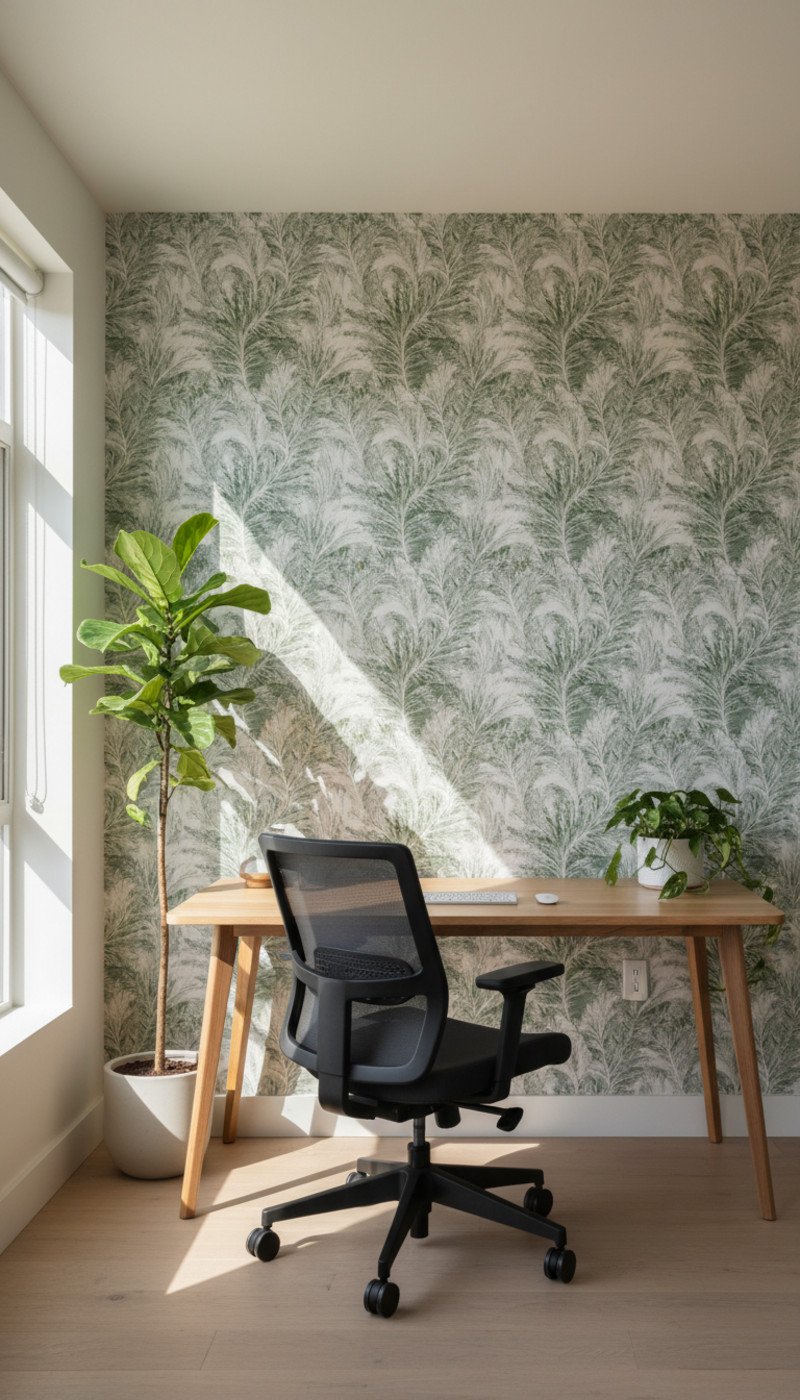
Not all geometric nature patterns are created equal. The most profound cognitive benefits come from a specific subset of fractals known as “mid-D” or “mid-range” fractals. These patterns possess a fractal dimension (a measure of complexity) between D~1.3 and D~1.5. This range perfectly mirrors the complexity found in many natural scenes, such as a gentle coastline or the branching of a tree. This is a critical detail often overlooked by competitors who simply promote “nature-inspired” decor without scientific specificity.
Why is this D~1.3-1.5 range so effective? Research compiled in a comprehensive review of biophilic fractals shows that exposure to these patterns triggers several positive neurological responses. Quantitative electroencephalography (qEEG) scans reveal that mid-D fractals produce beta wave peaks, which are directly associated with heightened attention and concentration. Furthermore, studies show these specific patterns improve visual task performance, spatial awareness, and even object perception. In preference tests, an overwhelming 95% of participants favored mid-D fractal images over simpler or more complex non-fractal designs. By choosing organic fractal decor within this scientifically validated range, you are selecting a pattern optimized for the human brain’s visual and cognitive systems.
Choosing Your Serene Backdrop: Actionable Advice for Fractal Wallpaper Selection
Translating these scientific principles into a practical purchase requires a focused approach. When selecting your Fractal Pattern Wallpaper, you’re not just choosing a color; you’re selecting a cognitive tool. Here’s a step-by-step guide to making an informed choice.
Step 1: Identify Mid-D Visual Characteristics
Since most manufacturers don’t list the “fractal dimension” on their product pages, you need to train your eye. Look for patterns that balance detail and empty space. Avoid patterns that are too simple (low-D, like a plain brick pattern) or too chaotic and dense (high-D, like visual static). The best biophilic wall coverings will have a branching, self-similar structure that feels complex but not overwhelming. Think of frost on a windowpane, the veins of a leaf, or the pattern of a fern.
Step 2: Consider Scale and Color
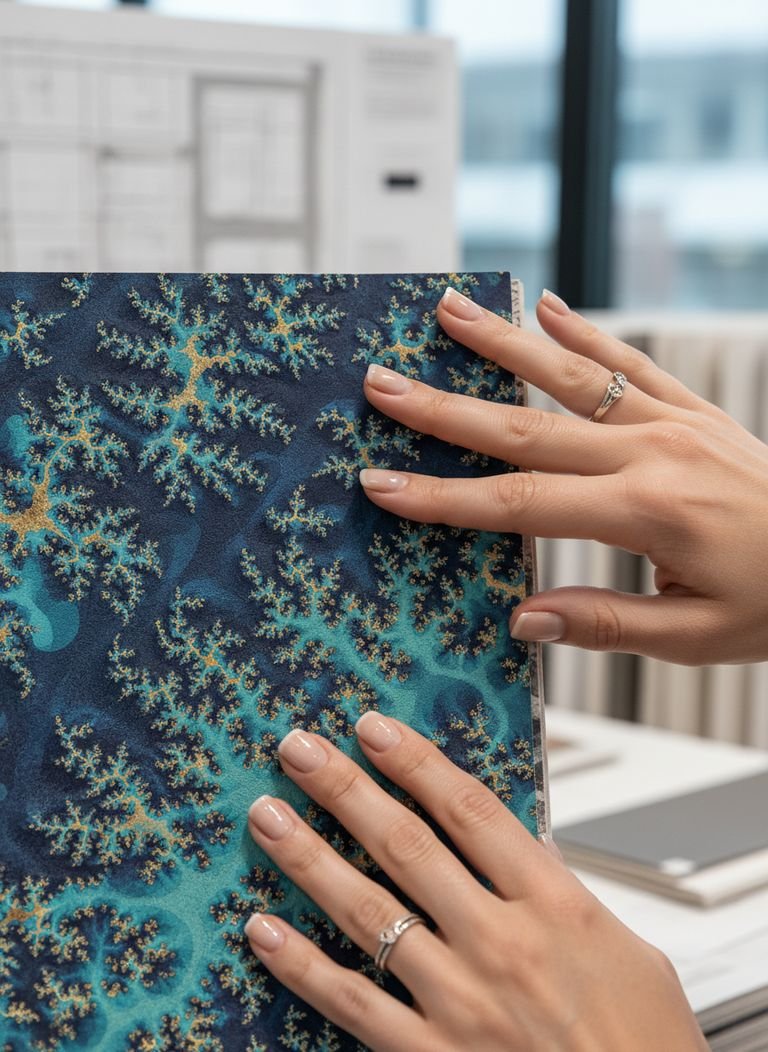
The scale of the pattern should match the size of your room. A large, sweeping pattern can make a small office feel cramped, while a tiny, intricate pattern might get lost on a large wall. Order samples to see how the pattern looks in your space and under your specific lighting conditions. For color, lean towards palettes found in nature—soft greens, earthy browns, sky blues, and muted greys—to enhance the calming, biophilic effect. These natural tones complement the fractal geometry and support a serene atmosphere. You can find excellent guidance on pairing wallpaper with furniture in our guide to living room wallpaper installation tips, with principles that apply directly to a home office.
Step 3: Evaluate Material and Installation
Practicality is key. For a home office, consider peel-and-stick wallpaper for its ease of installation and removal, which is ideal for renters or those who like to update their decor. For a more permanent, high-end finish, traditional non-woven wallpaper offers better durability and texture. Always calculate your square footage carefully and order 10-15% extra to account for pattern matching and mistakes. Combining natural textures is also effective; consider pairing your wallpaper with acoustic slat wood panels to enhance both visual appeal and sound dampening.
Elevating Your Home Office: Beyond Just a Pretty Pattern
Incorporating fractal patterns is a significant step, but viewing it as part of a holistic biophilic design strategy unlocks even greater benefits. While specific research on the optimal placement of fractal wallpaper in a home office is still emerging, the foundational principles of biophilic design emphasize intentionality. The goal is to create an immersive, nature-connected experience that promotes overall well-being. According to general biophilic research from 2024, consistent exposure to natural elements and patterns is key for sustained stress reduction and cognitive health.
Consider placing the wallpaper on the wall you face most often during the day, such as behind your monitor, to provide a constant, passive “micro-restoration” for your eyes and brain during screen breaks. Alternatively, an accent wall to your side can create a calming peripheral view. This approach is part of a larger strategy of making energy efficient upgrades to your home that also enhance personal wellness. Combining your wallpaper with other natural elements—like live plants, natural light, and materials like wood or stone—will amplify the positive effects, creating a cohesive and restorative ecosystem rather than just a decorated room.
The Green Choice: Eco-Friendly Fractal Wall Coverings for a Sustainable Sanctuary
For a wellness-focused individual like Elena, the “how” and “what” of decor are just as important as the “why.” A truly biophilic space must also be a healthy and sustainable one. Many conventional wallpapers can off-gas volatile organic compounds (VOCs) from inks, vinyls, and adhesives, which can negatively impact indoor air quality and, by extension, your health and productivity. Choosing eco-friendly organic fractal decor is essential for aligning your design choices with your wellness and sustainability values.
The research report highlights a significant gap among competitors: a lack of detailed comparisons of eco-friendly material certifications. When shopping, look for these key indicators:
- FSC (Forest Stewardship Council) Certified Paper: This ensures the paper is sourced from responsibly managed forests, protecting biodiversity and supporting local communities.
- Greenguard or Greenguard Gold Certification: This is one of the most rigorous standards, certifying that a product has met strict chemical emissions limits, contributing to healthier indoor air.
- Water-Based Inks: Opt for wallpapers printed with water-based inks instead of solvent-based inks, as they contain far fewer VOCs.
- PVC-Free Materials: Avoid vinyl (PVC) wallpapers. Look for alternatives like non-woven paper, grasscloth, or other natural fiber-based materials.
By prioritizing these certifications, you ensure your sanctuary is not contributing to environmental harm or compromising your indoor air quality. This choice reflects a deep commitment to wellness that extends beyond personal benefits to planetary health, a core principle of thoughtful design and a key component of creating an authentic space with eco furniture sustainable principles.
Final Thoughts: Creating Your Cognitive Sanctuary
Your home office is more than just a place to work; it’s the command center for your professional life, and its environment directly impacts your performance and well-being. By moving beyond generic decor and embracing the science of biophilic design, you can create a space that actively supports your goals. The key lies in being intentional with your choices, understanding that the patterns, materials, and overall atmosphere you cultivate can either drain or restore your cognitive resources.
By carefully selecting a science-backed Fractal Pattern Wallpaper with a mid-range complexity (D~1.3-1.5) and ensuring it is made from sustainable, low-VOC materials, you are making a strategic investment in your health, focus, and productivity. This is how you transform a simple room into a functional, stress-reducing, and visually engaging sanctuary tailored to the demands of modern remote work. Ready to redefine your workspace? Explore our curated selection of biophilic designs today.
Frequently Asked Questions
What exactly is a “mid-D” fractal pattern?
A “mid-D” fractal pattern refers to a pattern with a mid-range fractal dimension (D), a mathematical measure of its complexity. Specifically, research points to the range of D ≈ 1.3 to 1.5 as being most effective for stress reduction and cognitive engagement. These patterns mimic the complexity of natural scenery like clouds, trees, and coastlines, which our brains are evolutionarily adapted to process effortlessly.
Will any nature pattern work for stress reduction?
Not necessarily. While most nature-inspired patterns can be pleasant, the most significant and measurable benefits come from patterns that are genuinely fractal and fall within the mid-D complexity range. A simple repeating leaf pattern, for example, is biomorphic (nature-shaped) but may not be fractal. True fractal patterns exhibit self-similarity at different scales, which is the key to their unique cognitive and physiological effects.
How can I know if a wallpaper has the right fractal dimension?
Most wallpaper manufacturers do not list the fractal dimension. The best approach is to visually assess the pattern. Look for designs that are complex but not chaotic, with repeating details at smaller scales. Patterns resembling ferns, lightning, snowflakes, or river deltas are excellent examples. You can also contact specialized biophilic design companies, as they may have technical data on the complexity of their patterns.
Are fractal pattern wallpapers expensive?
The cost can vary widely, similar to other designer wallpapers. Price is influenced by the material (peel-and-stick, non-woven, grasscloth), the brand, and the printing method (digital vs. traditional). While some high-end, scientifically designed options can be a significant investment, there are increasingly affordable and eco-friendly options available that fit the visual criteria for mid-D fractals.
Can I install fractal pattern wallpaper myself?
Yes, especially if you choose a peel-and-stick option, which is designed for DIY application. However, fractal patterns can be complex to match at the seams. It’s crucial to order extra material (at least 10% more than your measurements) and take your time to align the pattern perfectly. For traditional, paste-the-wall papers, professional installation might be a better choice if you’re not an experienced DIYer to ensure a seamless finish.